Key Highlights
- Third-trimester insomnia affects most pregnant women due to hormonal and physical shifts.
- U-shaped or C-shaped pregnancy pillows provide simultaneous back, belly, and knee support.
- White or pink noise masks intrusive sounds during lighter late-pregnancy sleep cycles.
- Magnesium glycinate may reduce restless legs and muscle cramps with provider approval.
- Limiting blue light exposure 60 minutes before bed helps natural melatonin production.
- Leaving bed after 20 wakeful minutes prevents negative psychological sleep associations.
What They Do not Tell You
The standard advice for third-trimester sleep is to simply lie on your side with a pillow between your knees, which completely ignores the reality of your changing body. You are likely waking up constantly because standard pillows cannot support your belly, back, and hips simultaneously.
We do the research. You do the parenting. Right now, you are staring at the ceiling at 2 AM, wondering how you are supposed to survive labor when you haven’t slept since Tuesday. The truth is that nearly 78% of pregnant women experience severe sleep disruptions during their third trimester Source. People love to say “sleep now before the baby comes,” which is the least helpful phrase in the English language. Your body is currently running a 24/7 construction site, and the scaffolding is cutting into your hips.
The Physical Reality
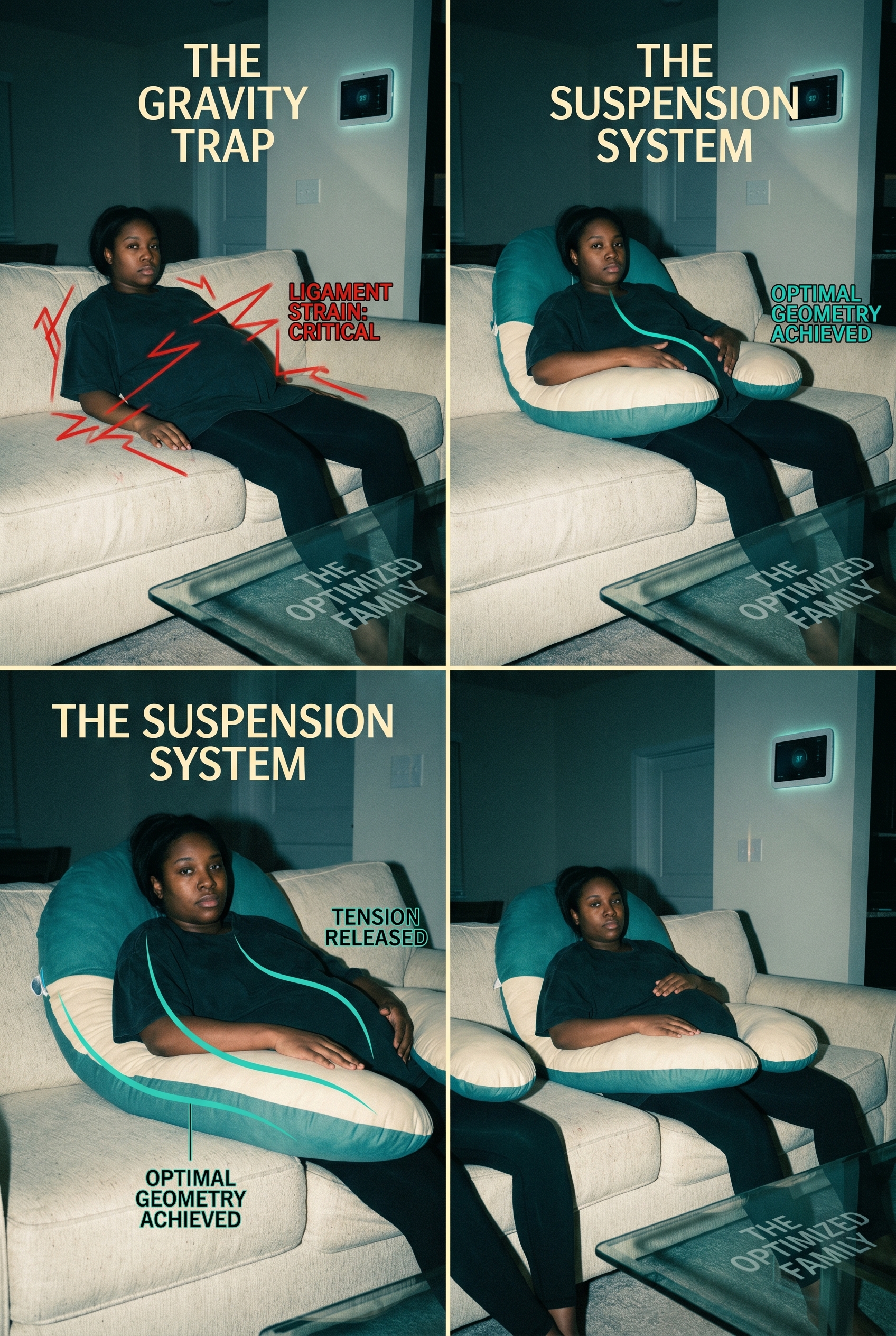
Your third-trimester insomnia is driven by a chaotic mix of shifting hormones, a compressed bladder, and a center of gravity that has moved completely forward. Lighter sleep phases dominate this stage, meaning even the smallest environmental noises or physical discomforts will jolt you fully awake.
Let’s break down the physics of what is happening under the hood. As your baby grows, the physical space for your lungs and bladder shrinks. You are operating with less oxygen per breath and a bladder capacity measured in thimbles.
Furthermore, your brain is actively changing your sleep architecture. Studies show that third-trimester sleep involves significantly less REM and deep sleep, keeping you in a lighter stage of rest Source. This is biological preparation for waking up to a newborn, but right now, it just means you hear every single car driving down the street.
Here is how your body is physically rebelling:
- Restless leg syndrome kicking in exactly when you finally lie down.
- Pelvic pressure that makes rolling over feel like a three-point turn in a semi-truck.
- Temperature regulation failures that leave you sweating through your sheets.
The Cost That Nobody Warned You About
Lying awake for hours in the middle of the night creates a psychological toll that compounds your physical exhaustion. Watching the clock turns your bed into a stress trigger rather than a place of rest, creating a negative feedback loop that makes falling asleep progressively harder.
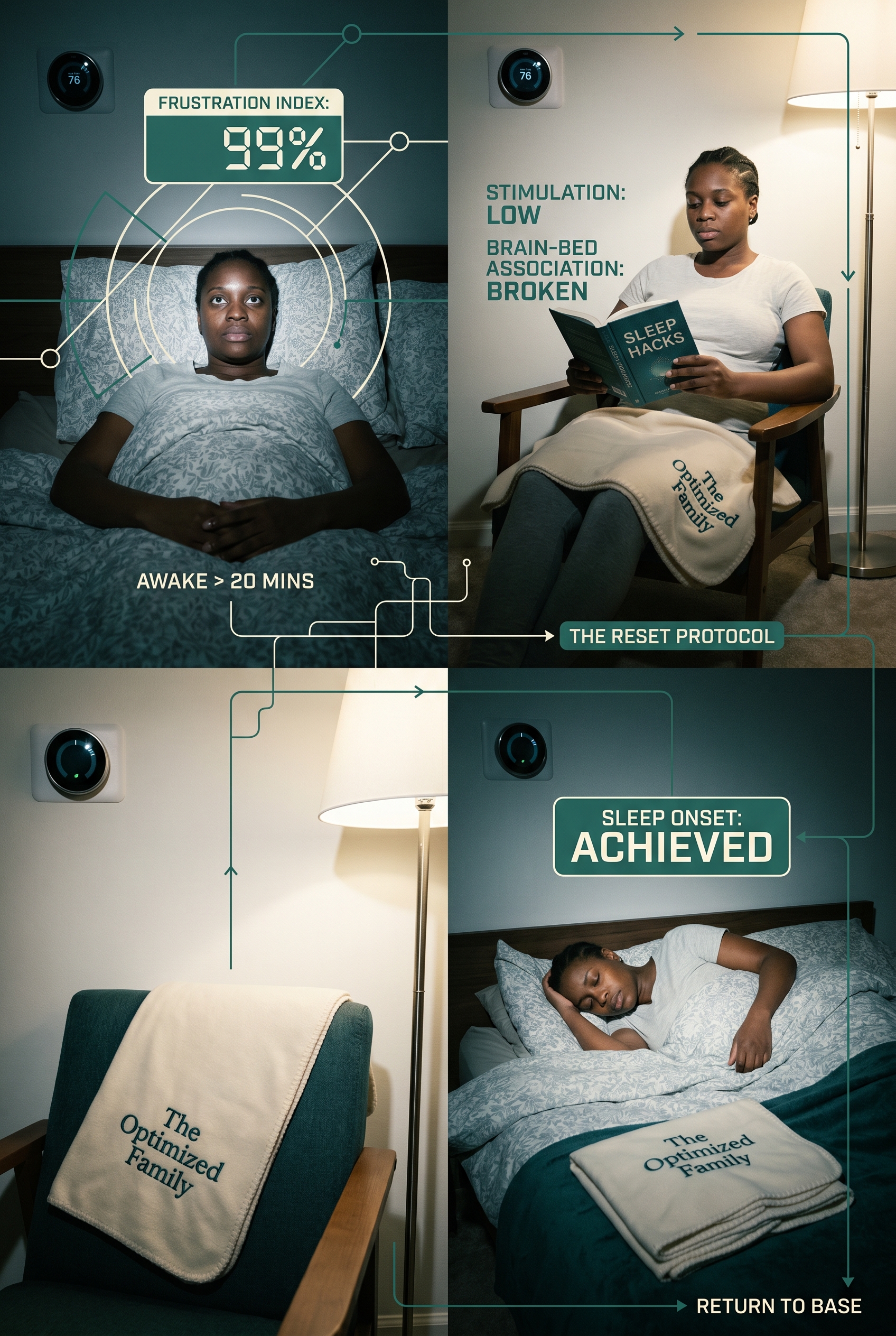
When you stay in bed tossing and turning, your brain starts associating the mattress with frustration instead of relaxation. This is why sleep experts recommend the 20-minute rule.
If you have been awake for 20 minutes, get up. Go to a dimly lit room and read a boring book or do some gentle stretching. Do not look at your phone. Research from the Sleep Foundation indicates that blue light exposure suppresses melatonin production for up to 60 minutes Source.
The cost of ignoring this? You end up dreading bedtime, which only floods your system with cortisol exactly when you need to be winding down.
Small Things That Actually Move The Needle
You can improve your sleep by upgrading your physical support system, masking disruptive noises, and establishing a strict sensory wind-down routine. These targeted adjustments work with your late-pregnancy physiology to reduce physical strain and signal to your brain that it is time to rest.
You do not need platitudes; you need structural engineering and biochemistry. Here is what actually helps:
- Deploy a U-shaped or C-shaped full-body pregnancy pillow. This prevents the need to physically rebuild a pillow fort every time you shift positions.
- Use continuous white or pink noise. Pink noise, which has deeper frequencies, is particularly effective at masking the sudden environmental sounds that pull you out of light sleep.
- Ask your provider about an OTC option like magnesium glycinate. Taking 200–400 mg at bedtime can help ease muscle cramps and reduce restless leg sensations Source.
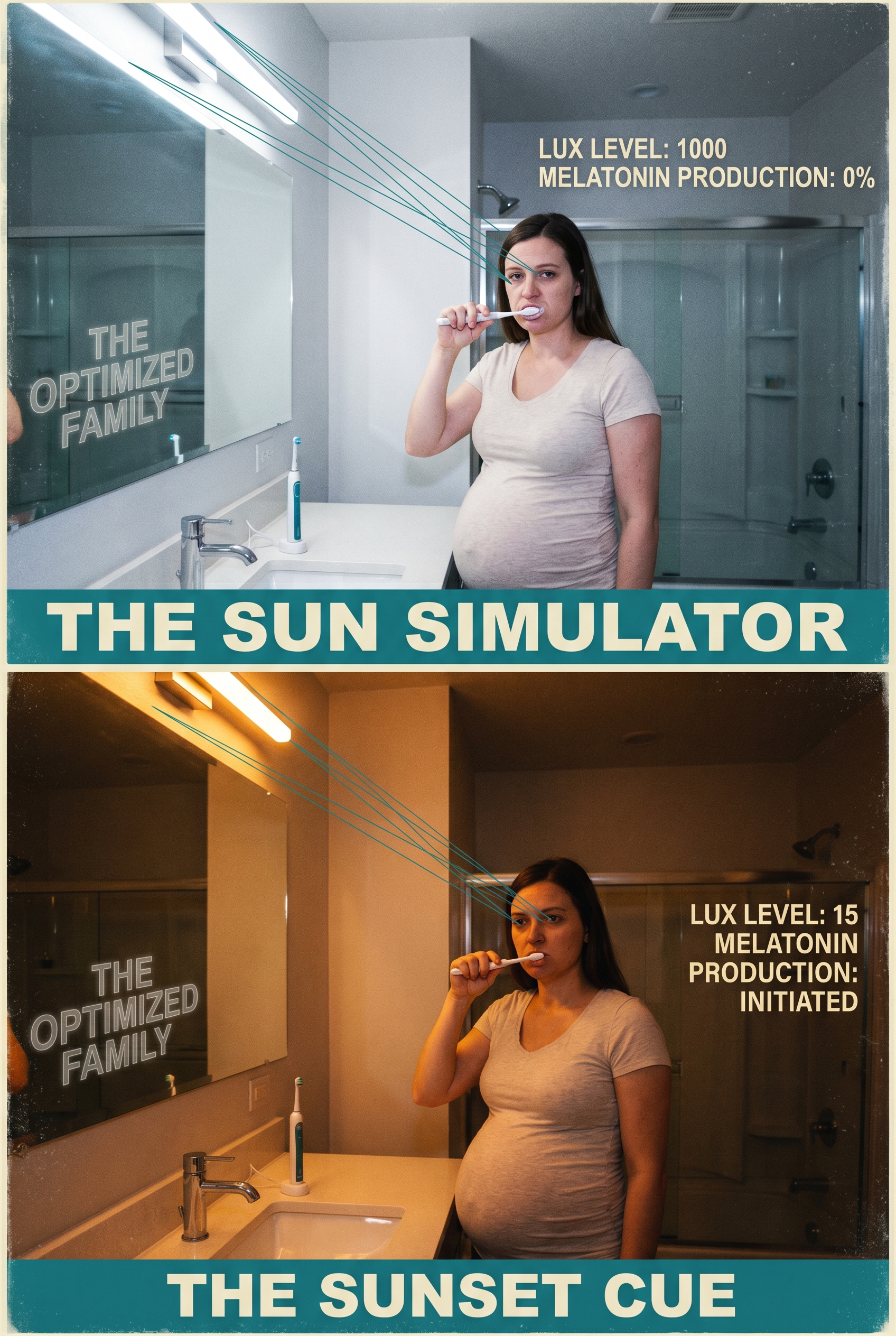
- Dim the lights at 9 PM. Your brain needs environmental cues to start the wind-down process. Stop looking at screens an hour before you want to be asleep.
When This Is Medical, Not Just Hard
While exhaustion is a normal part of late pregnancy, severe sleep deprivation coupled with specific physical symptoms warrants an immediate call to your provider. High blood pressure, severe headaches, or sudden swelling are red flags that require professional evaluation rather than just better pillows.
There is a distinct line between normal third-trimester misery and a situation where you need to involve a professional.
| Normal Third Trimester | Call Someone Now |
|---|---|
| Waking up 4 times to pee | Severe, unrelenting headache that prevents sleep |
| General hip ache when side-sleeping | Sudden, severe swelling in face or hands |
| Mild leg cramps relieved by stretching | Chest pain or extreme shortness of breath when lying flat |
| Taking 45 minutes to fall back asleep | Complete inability to sleep for over 24 hours |
Do not try to tough out symptoms that feel alarming. If you hit the right column, pick up the phone.
The Questions You would Google at 2 AM
At two in the morning, your exhausted brain will search for quick fixes to impossible physical problems. You are likely wondering if you can take anything over the counter, why your legs will not stop moving, or if this level of exhaustion is going to harm the baby.
- Build a supportive sleep fortress: Use a U-shaped or C-shaped full-body pregnancy pillow to simultaneously support your belly, back, and knees without constant readjustment.
- Block out environmental disruptions: Turn on a white or pink noise machine to mask sudden sounds that easily wake you during lighter third-trimester sleep phases.
- Implement the 20-minute reset rule: If you cannot fall asleep within 20 minutes, leave the bed to do a quiet, non-stimulating activity until you feel tired.
- Create a screen-free wind-down routine: Stop looking at phones or tablets 60 minutes before bed to prevent blue light from suppressing your natural melatonin production.
We do the research. You do the parenting.
Stop guessing at 2 AM. Get the visual playbook.
80+ peer-reviewed studies translated into visual shortcuts you can actually use, one-handed, with a baby attached to you.

Frequently Asked Questions
Can I take melatonin while pregnant?
The safety of melatonin during pregnancy is not fully established by large-scale studies. Most professional organizations recommend avoiding it. Instead, focus on behavioral changes like limiting blue light 60 minutes before bed to support your body’s natural melatonin production. Always ask your provider before trying new supplements.
Why do my legs get so twitchy right when I lie down?
This is often restless leg syndrome, which affects up to a third of pregnant women. It is linked to iron or folate drops, hormonal shifts, and circulation changes. Gentle stretching, warm baths, and asking your provider about an OTC option like magnesium glycinate can help relieve the sensation.
Is it bad to sleep on my back in the third trimester?
Yes, sleeping flat on your back late in pregnancy can compress the inferior vena cava, reducing blood flow to you and the baby. However, do not panic if you wake up on your back. Just use a C-shaped pregnancy pillow to comfortably wedge yourself onto your left or right side.
Should I just stay in bed if I cannot sleep?
No. Lying awake in the dark creates a negative psychological association with your bed. If you are awake for more than 20 minutes, get up. Move to a dimly lit room, read a physical book, and only return to bed when your eyelids feel heavy.
Will this lack of sleep hurt my baby?
Your baby is remarkably insulated from your exhaustion and will take the rest they need regardless of your sleep schedule. However, severe sleep deprivation affects your physical resilience and mental health. If you are experiencing zero sleep for consecutive days, call your provider to discuss safe relief strategies.