
Key Highlights
- Left Occiput Anterior (LOA) is the optimal position for birth.
- LOA positions the smallest diameter of the skull downward.
- Posterior positioning causes the baby’s spine to grind against yours.
- Deep reclining couches encourage poor fetal positioning.
- Hands and knees postures use gravity to help babies rotate.
- Babies can still shift orientation even during early labor.
What They Do not Tell You
The ideal position for birth is not just “head down.” It is specifically Left Occiput Anterior (LOA), meaning your baby is head-down, facing your back, with their chin tucked. If they face forward instead, you get introduced to the bone-crushing reality of back labor. We do the research. You do the parenting.
You thought “head down” was the finish line. It is not. Head down is just getting into the stadium. The actual goal is Left Occiput Anterior. When a baby is in the LOA position, they are perfectly aligned to spiral down the birth canal like a corkscrew. When they are not, you are essentially trying to push a grand piano through a dog door.

The Physical Reality
Your pelvis is an engineering puzzle, and the baby’s skull is the puzzle piece. In the LOA position, the smallest diameter of the head navigates the birth canal. When they face the wrong way, their hard spine grinds directly against your spine, turning a difficult process into a physics nightmare.
The baby’s head is not a perfect sphere; it is an oval. By 36 weeks, roughly 96 percent of babies settle into a head-down orientation Source. But the exact angle of that head dictates your labor experience. When the baby’s spine rests against your belly (anterior), your abdominal muscles act like a supportive hammock. When the baby’s spine rests against your spine (posterior), bone grinds on bone, resulting in excruciating back labor.
The Cost That Nobody Warned You About
The hidden cost of modern comfort is a poorly positioned baby. Slumping in deep couches tilts your pelvis backward, encouraging the baby to flip and face forward. This posterior position can stall labor progression and intensify pain, turning what should be a straightforward descent into an agonizing, prolonged marathon.
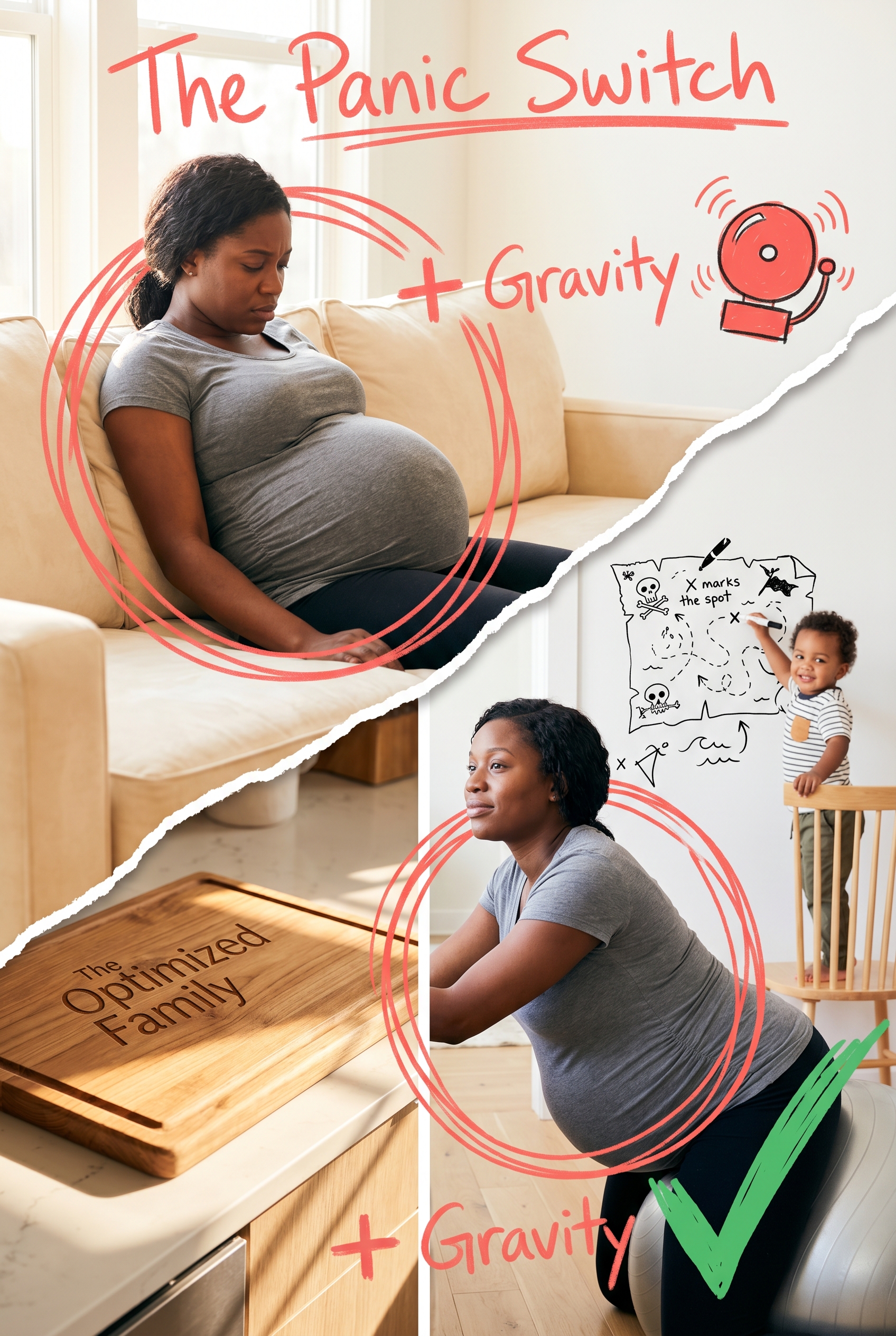
Let us talk about your living room furniture. The deep, plush, sink-into-it sofa is your enemy right now. When you recline backward, gravity pulls the heaviest part of the baby—their spine and the back of their head—toward your back. The structural consequences are immediate:
- Back labor becomes a mathematically higher probability.
- Labor can stall because the head fails to apply even pressure to the cervix.
- Pushing becomes a feat of sheer, exhausting mechanical force.
Small Things That Actually Move The Needle
You can use gravity and posture to encourage your baby into the LOA position. Forward-leaning postures on hands and knees or sitting on a birth ball create a hammock effect in your abdomen. This naturally rotates the heaviest part of the baby away from your spine and toward your belly.
You cannot force a baby to move, but you can change the architecture of the room they are in. By altering your pelvic angle, you offer them the path of least resistance.
- Hands and knees: Scrub the floor, or just stare at it. Gravity does the work.
- Birth ball: Sit like you are about to launch off a ski jump, keeping your hips higher than your knees.
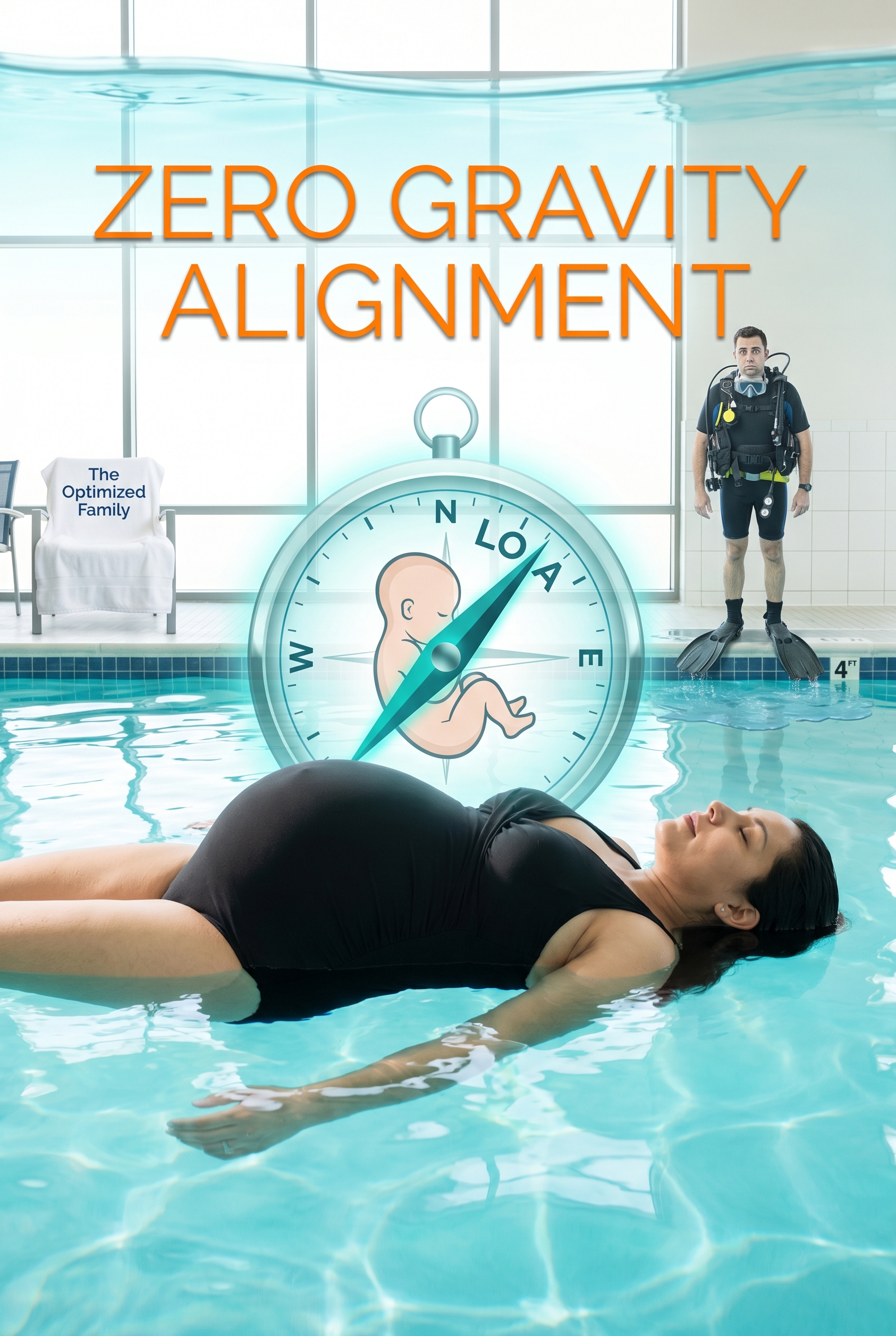
- Swimming: Buoyancy is a biological hack that relieves pelvic pressure and allows the baby to float into alignment.
| Posture | Pelvic Angle | Gravity’s Effect on Baby |
|---|---|---|
| Slumped on Couch | Tilted backward | Pulls baby’s spine to your spine (Posterior risk) |
| Sitting on Birth Ball | Tilted forward | Pulls baby’s spine to your belly (LOA encouraged) |
| Hands and Knees | Neutral/Hanging | Creates a hammock for ideal natural rotation |
When This Is Medical, Not Just Hard
A baby facing the wrong way is painful, but it is not an emergency. However, if you experience sudden, severe abdominal pain, bleeding, or a sudden decrease in fetal movement, you need immediate professional help. These signs warrant an immediate call to your provider, as they indicate complications beyond positioning.
Back labor is brutal, but it is standard brutal. You will know the difference between mechanical pressure and a systemic issue. If your water breaks and the fluid is green or brown, or if you feel a pulsing cord in the birth canal, bypass the birth ball and go straight to the hospital.
The Questions You would Google at 2 AM
Late-night panic searching is a rite of passage, especially when it feels like a bowling ball is resting on your lower spine. You are desperately trying to figure out if your baby is in the correct position or if you are doomed to back labor. Here are the answers you need.
- Utilize Hands and Knees: Spend 10 to 15 minutes a day on your hands and knees. This allows your abdomen to act as a hammock, using gravity to pull the baby’s heavy spine toward your front.
- Swap the Couch for a Birth Ball: Replace deep, reclining seating with a firm birth ball. Ensure your hips stay higher than your knees to angle your pelvis forward and encourage the baby to tuck their chin.
- Get in the Water: If you have access to a pool, go swimming. The buoyancy relieves the intense pressure on your pelvis and gives the baby weightless space to rotate into the Left Occiput Anterior position.
- Sleep on Your Left Side: Rest on your left side with a thick pillow between your knees and ankles. This keeps your pelvis open and aligned, preventing the baby from rolling into a posterior position overnight.
We do the research. You do the parenting.
Stop guessing at 2 AM. Get the visual playbook.
80+ peer-reviewed studies translated into visual shortcuts you can actually use, one-handed, with a baby attached to you.

Frequently Asked Questions
Can a baby change position during labor?
Yes. While it is incredibly frustrating, the specific anterior-versus-posterior orientation can shift even during early labor. The contractions themselves, combined with your movement and upright positioning, can help rotate a stubborn baby into the optimal Left Occiput Anterior position right before the final descent.
What does back labor actually feel like?
Back labor feels like intense, localized, grinding pressure in your lower spine that does not completely fade between contractions. It happens when the hardest part of the baby’s skull presses directly against your tailbone. It is a severe mechanical pressure that requires counter-pressure to ease.
Is it too late to change their position at 38 weeks?
It is never completely too late until the baby is crowning. While space is exceptionally tight at 38 weeks, babies still shift. Utilizing forward-leaning postures, spending time on a birth ball, and swimming can still provide the mechanical advantage needed to encourage a last-minute rotation.
Why does my doctor care if the chin is tucked?
A tucked chin presents the absolute smallest diameter of the baby’s skull to your pelvis. If the chin is extended, a much wider portion of the head tries to navigate the same narrow bony passage. It is the difference between fitting a key smoothly versus jamming it.
Does walking help the baby drop into the right position?
Walking is highly effective because it uses gravity and the asymmetrical rocking motion of your pelvis to help wiggle the baby down. It encourages the baby’s head to engage properly in the pelvis, which naturally promotes the ideal tuck and rotation needed for a smoother delivery.