Key Highlights
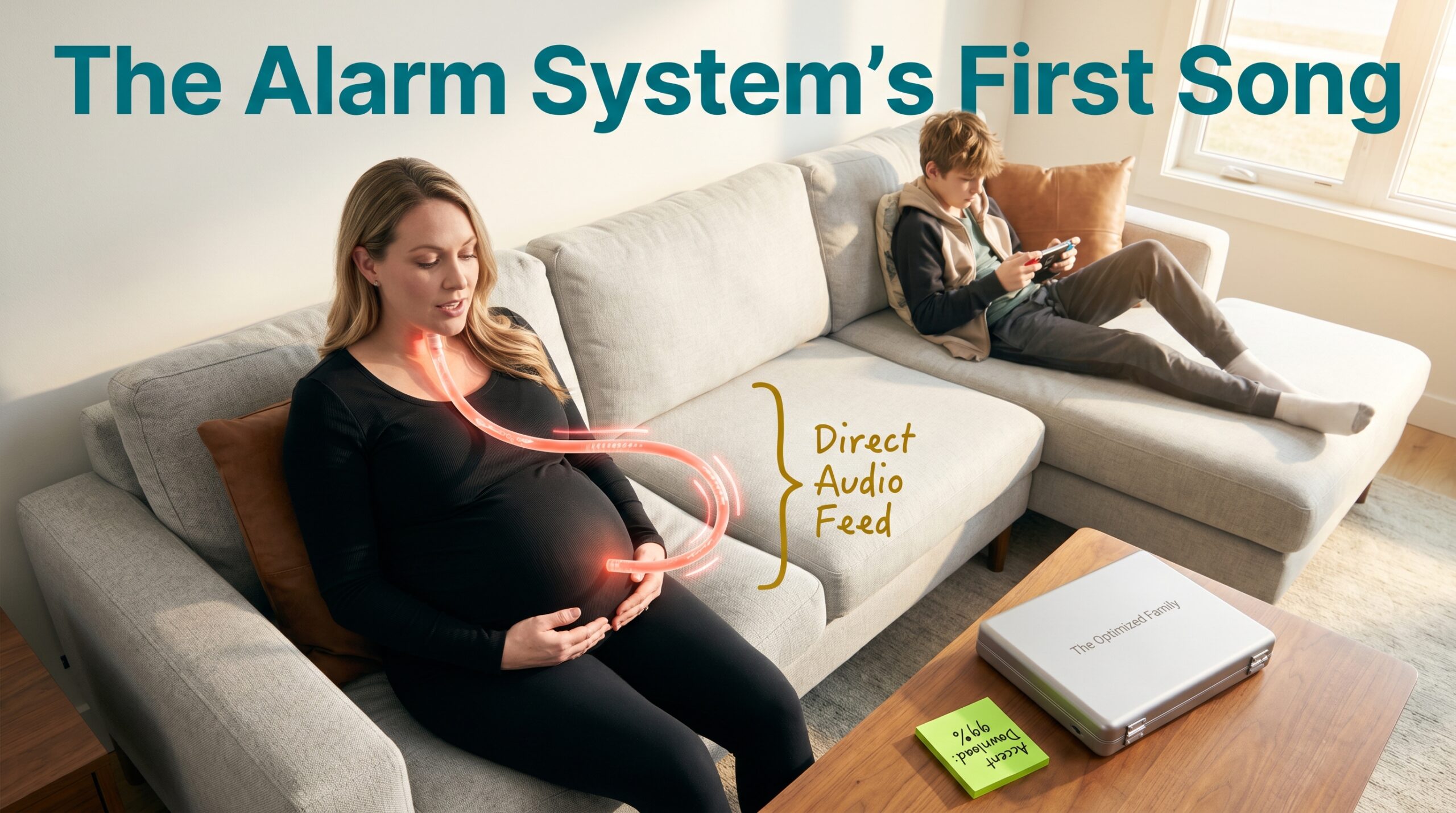
- Babies absorb the melody of their mother’s native language during the third trimester.
- Bone conduction transmits the rhythm and intonation of your voice directly to the fetus.
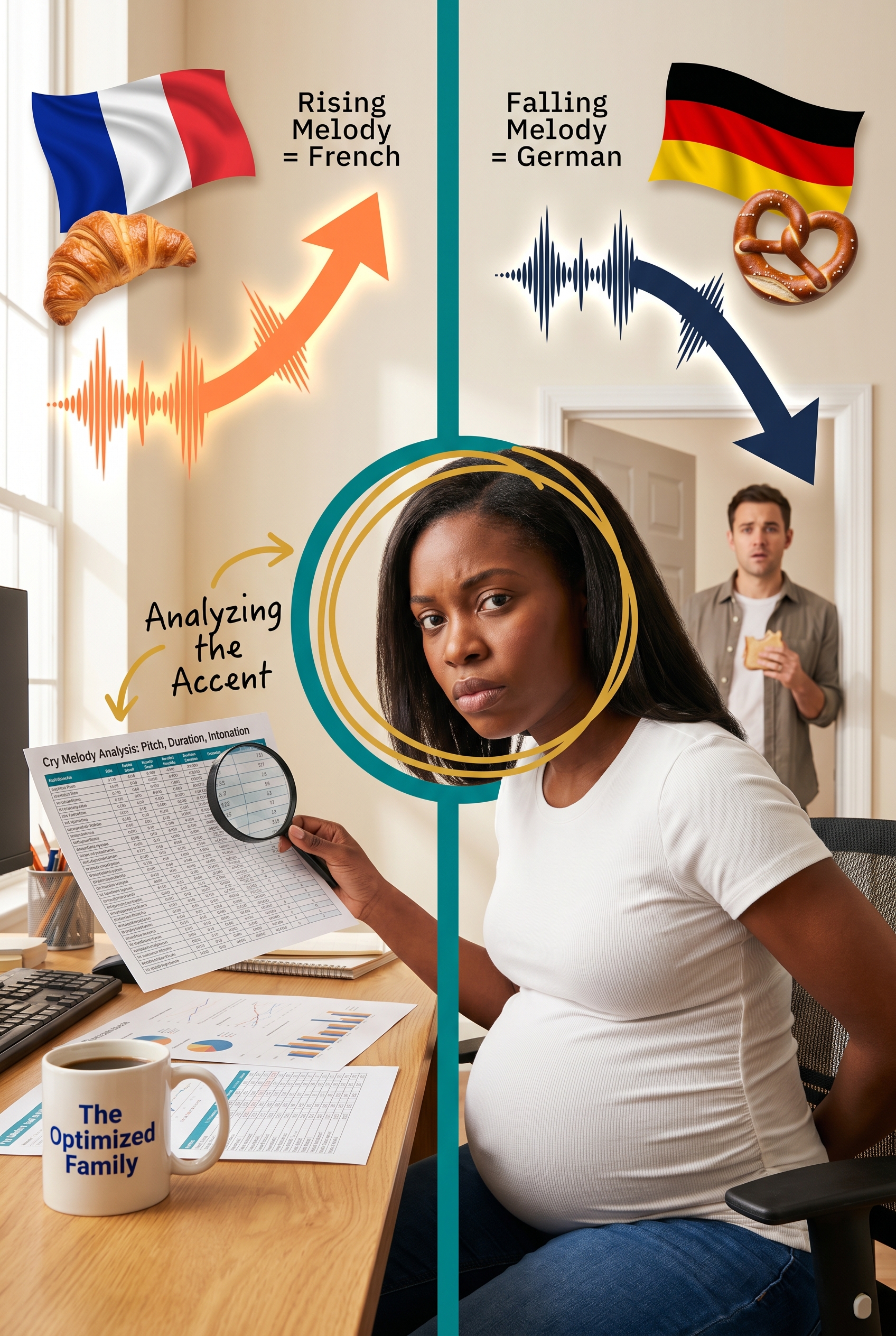
- French newborns cry with rising melodies, while German newborns cry with falling melodies.
- Prenatal language exposure gives infants a massive head start on complex speech processing.
- Bilingual mothers provide a dual-melody cognitive foundation before their baby is even born.
The Midnight Panic
At 2 AM, your newborn’s wail sounds like a random siren designed to break your spirit. In reality, that cry is a highly structured, linguistically specific melody. Your baby is actually crying with an accent, actively practicing the native language patterns they absorbed during your third trimester.
We do the research. You do the parenting. Right now, you are holding a tiny, furious human who is screaming at maximum volume, and you are wondering if they are broken. They are not. They are just speaking your language with alarming enthusiasm.
What You are Actually Seeing
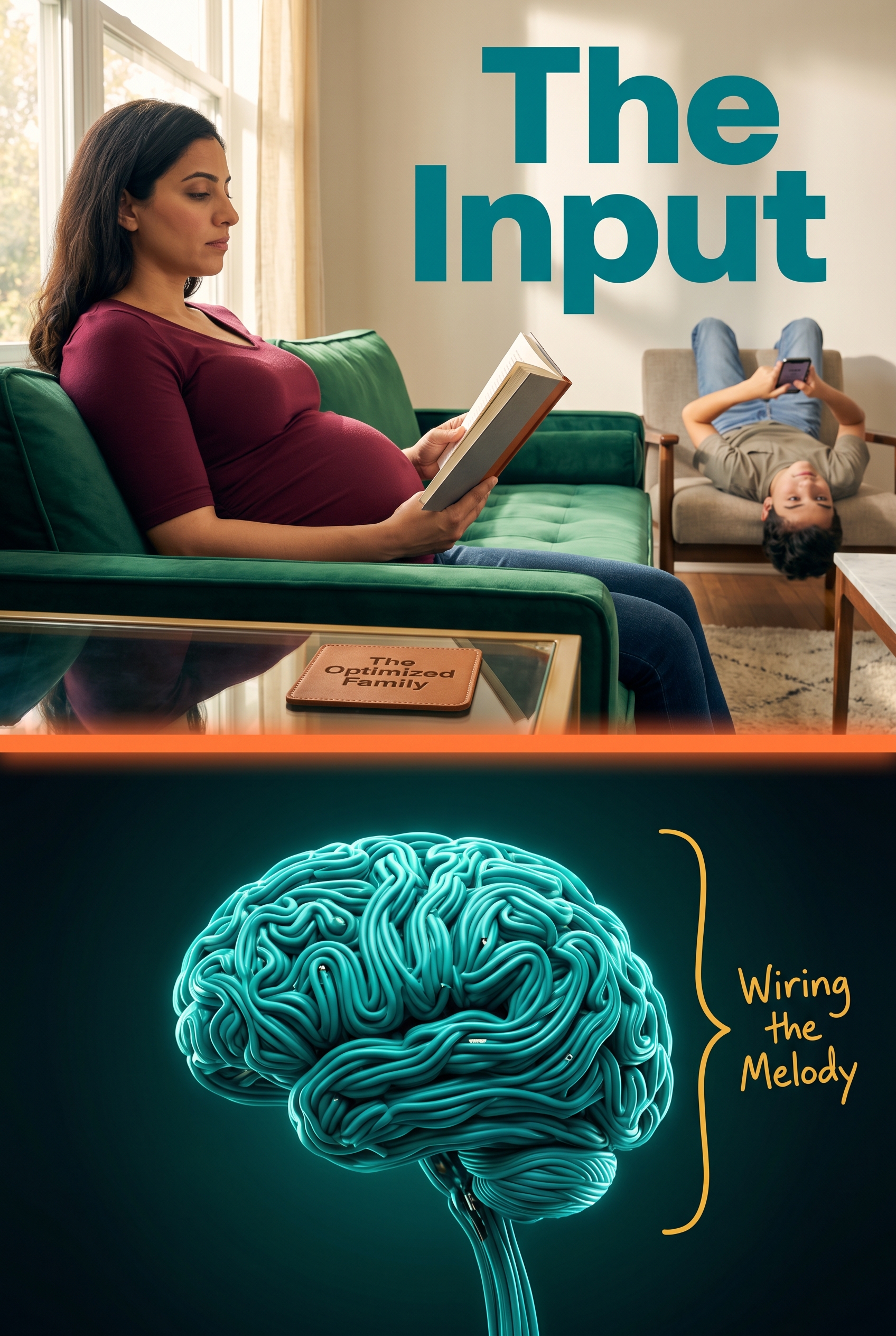
You are witnessing the results of prenatal acoustic engineering. Through bone conduction, your voice bypassed the amniotic fluid and delivered thousands of hours of rhythmic data to the fetus. The newborn cry you hear is a direct reflection of your specific linguistic intonation and melody.
A fascinating study from the University of Würzburg revealed that French newborns cry with a rising melody contour, matching the upward inflection of the French language. Meanwhile, German newborns cry with a falling melody contour, perfectly mimicking the downward intonation of German.
Your baby is not just making noise; they are executing a highly specific acoustic program.
| Sound Source | Transmission Method | What the Fetus Actually Hears |
|---|---|---|
| Outside Voices | Air to fluid | Muffled, indistinct Charlie Brown teacher noises. |
| Mother’s Voice | Bone conduction | Clear rhythmic patterns, stress, and distinct melody. |
| Sudden Noises | Direct impact | Startle-inducing acoustic shockwaves. |
The Developmental Math
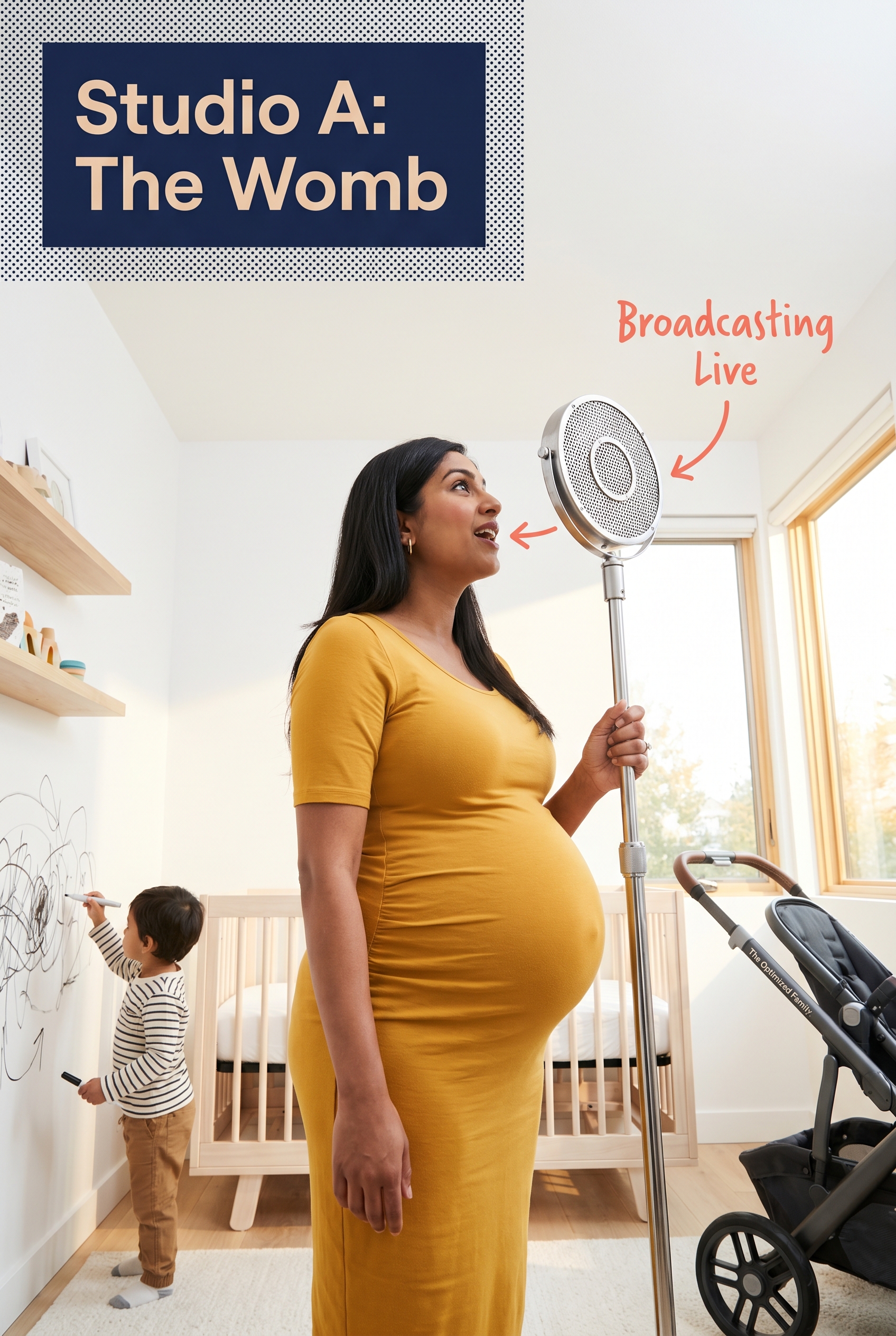
Fetuses begin actively processing complex auditory data around week 27 of gestation. By analyzing the prosodic patterns—rhythm, stress, and intonation—of their mother’s voice, they build a foundational acoustic map. This means they log over two months of continuous language practice before ever taking a breath.
This is not passive listening. It is active data collection. According to the Harvard Center on the Developing Child, early neural connections are built through consistent environmental inputs. Your baby is mapping the prosody of your speech.
Here is what your baby is actually learning while floating in the dark:
- Rising and falling pitch contours.
- Syllable stress and rhythmic timing.
- The emotional cadence of your daily stress-rants in traffic.
The biological timeline of this acoustic mastery is precise:
- Week 27: The auditory system comes online and begins receiving data.
- Week 32: The brain begins categorizing specific maternal voice patterns.
- Birth: The infant deploys these patterns in their very first vocalizations.
How To Ease The Transition
You support this linguistic transition simply by existing and speaking your native language naturally. There is no need for external speakers on your belly. Your standard daily conversations, complaints, and laughter provide the exact acoustic blueprint your baby needs to begin processing speech after birth.
If you are bilingual, you are delivering a masterclass in dual-melody processing. The American Academy of Pediatrics (AAP) notes that early exposure to multiple languages builds robust cognitive flexibility. By speaking two languages naturally, you provide an early foundation for multilingual processing without requiring any extra effort on your part.
- Speak Naturally: Talk normally throughout your day to provide consistent, high-quality auditory exposure to the fetus.
- Use Your Native Language: Speak your native language primarily, as it carries your most natural melodic intonation and rhythm.
- Embrace Bilingualism: If you are bilingual, speak both languages naturally to introduce dual prosodic patterns early on.
- Skip the Belly Speakers: Do not force artificial learning with headphones on your stomach; your internal bone conduction is the perfect acoustic curriculum.
Red Flags To Watch For
While variations in cry melodies are completely normal biological adaptations, an absence of vocalization or response to sound is not. If your newborn does not react to loud noises or has an unusually weak, high-pitched, or cat-like cry, these symptoms warrant an immediate call to your provider.
We appreciate the science of crying, but we also respect the limits of biology. A healthy baby is a loud, appropriately responsive baby. If you notice a lack of startle reflex to sudden noises or an inability to calm when hearing your familiar voice, bypass the internet and consult a professional to help resolve the issue.
We do the research. You do the parenting.
Stop guessing at 2 AM. Get the visual playbook.
80+ peer-reviewed studies translated into visual shortcuts you can actually use, one-handed, with a baby attached to you.

Frequently Asked Questions
Do I need to play language tapes to my belly?
Absolutely not. The amniotic fluid muffles external audio, making it sound like a cheap underwater speaker. Your voice, however, travels directly through your skeleton via bone conduction. Just speaking naturally during your normal day provides the perfect acoustic curriculum for your baby.
What if I speak multiple languages during pregnancy?
Bilingual mothers expose their babies to dual melodic patterns simultaneously. This dual exposure provides a massive cognitive advantage, laying an early foundation for multilingual processing. Your baby is simply logging both sets of prosodic data, building a more complex auditory map before birth.
Does the father’s voice affect the baby’s cry melody?
No, external voices do not shape the initial cry melody. Because the father’s voice must travel through the air and amniotic fluid, it loses the sharp prosodic details. Only the mother’s voice, transmitted via internal bone conduction, delivers the high-fidelity rhythmic data required.
Why does my baby still sound like a screaming banshee?
While the underlying melody matches your native language, the volume and urgency are driven by basic survival instincts. The rising or falling intonation is layered underneath the sheer acoustic force of a tiny human demanding immediate caloric intake or a diaper change.
When should I worry about my baby’s crying sounds?
If your baby has an exceptionally weak cry, sounds like a high-pitched cat, or fails to startle at loud noises, contact your pediatrician. While melody variations are fascinating developmental milestones, any complete lack of vocalization or extreme distress warrants an immediate call to your provider.