
Key Highlights
- Newborns lack the neurological maturity to shiver when they get dangerously cold.
- Babies rely entirely on a special reserve called brown fat for body heat.
- Brown fat is rapidly accumulated during the final four to six weeks of pregnancy.
- Premature infants struggle with temperature because they miss this crucial fat-building window.
- Depleted brown fat can lead to dangerous drops in your baby’s blood sugar.
The Midnight Panic
You are staring at your newborn in a room that feels perfectly comfortable to you, wondering why they seem so fragile and cold. The panic sets in because you know babies cannot regulate their own temperature well. This is entirely normal, and it comes down to a biological mechanism that is still booting up in their tiny bodies.
We do the research. You do the parenting. When your baby makes the jarring transition from the 98.6°F womb to a 72°F delivery room, the physical shock is entirely real. They cannot shiver to warm up. Instead, they rely on a built-in biological furnace that takes over the heavy lifting of keeping them stable.
What You are Actually Seeing
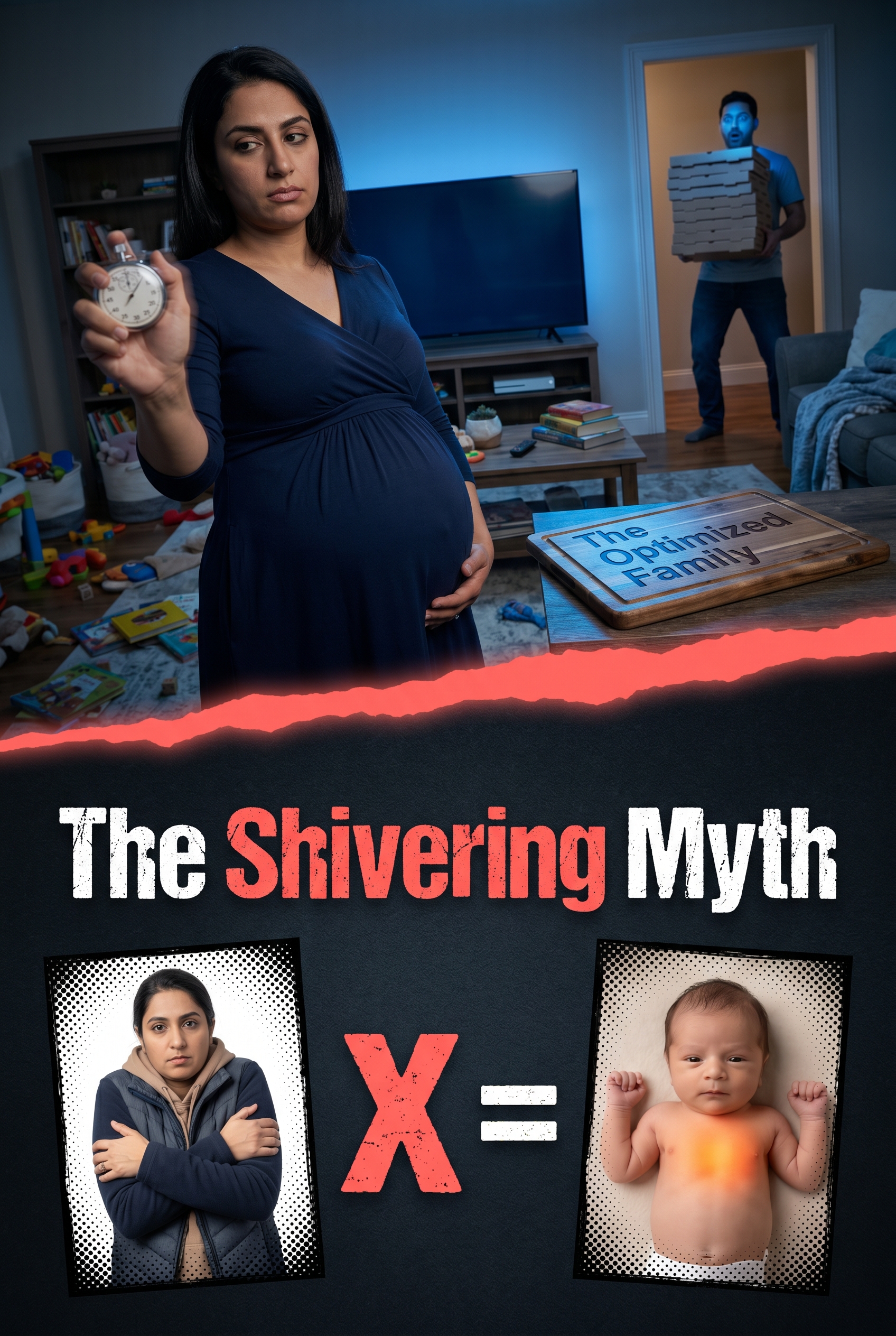
What you are observing is your baby relying entirely on a specialized reserve called brown fat to stay warm. Because newborns lack the neurological maturity to shiver, they burn this unique, mitochondria-packed tissue to generate heat directly. It acts as an internal thermal jacket designed specifically for the postpartum transition.
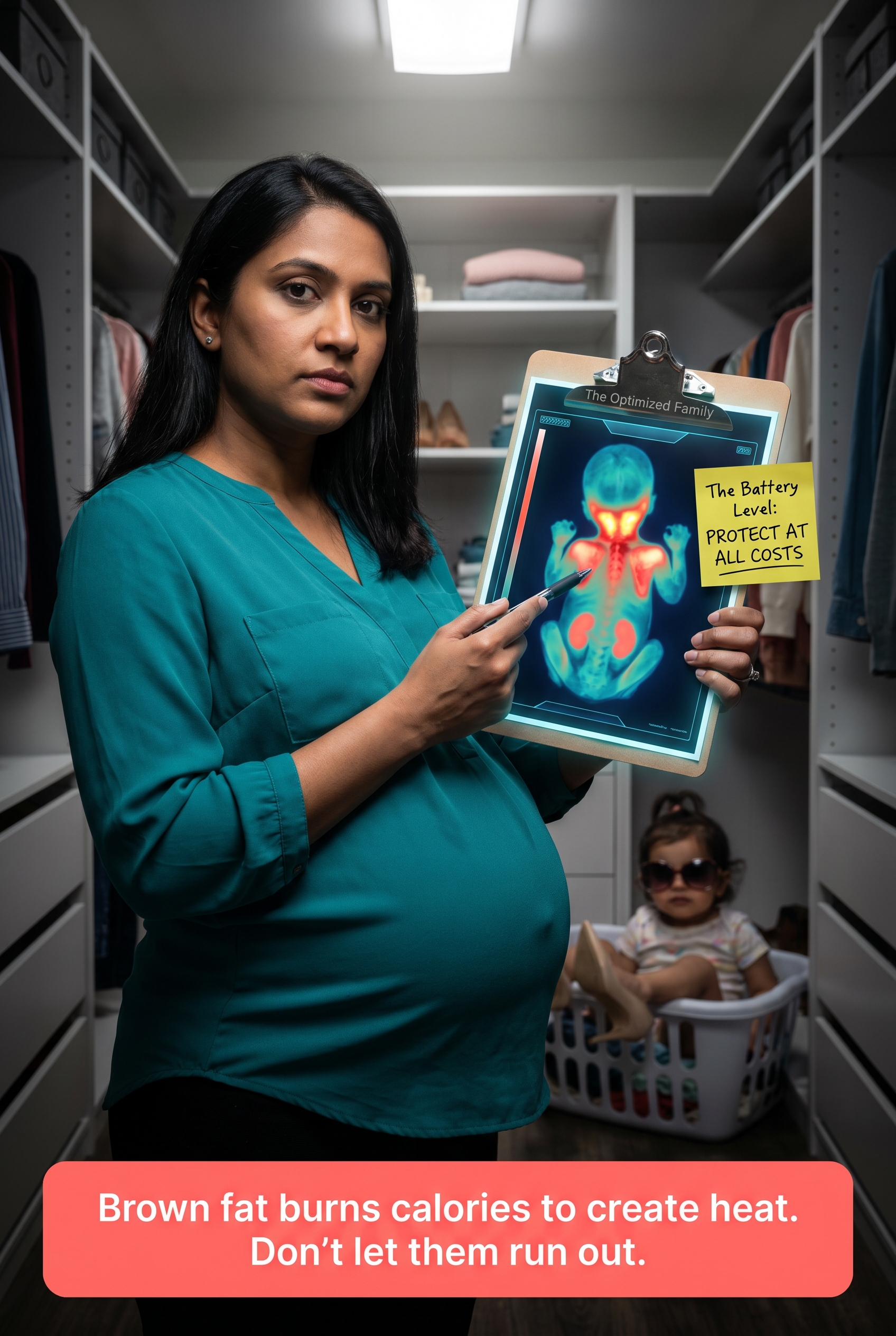
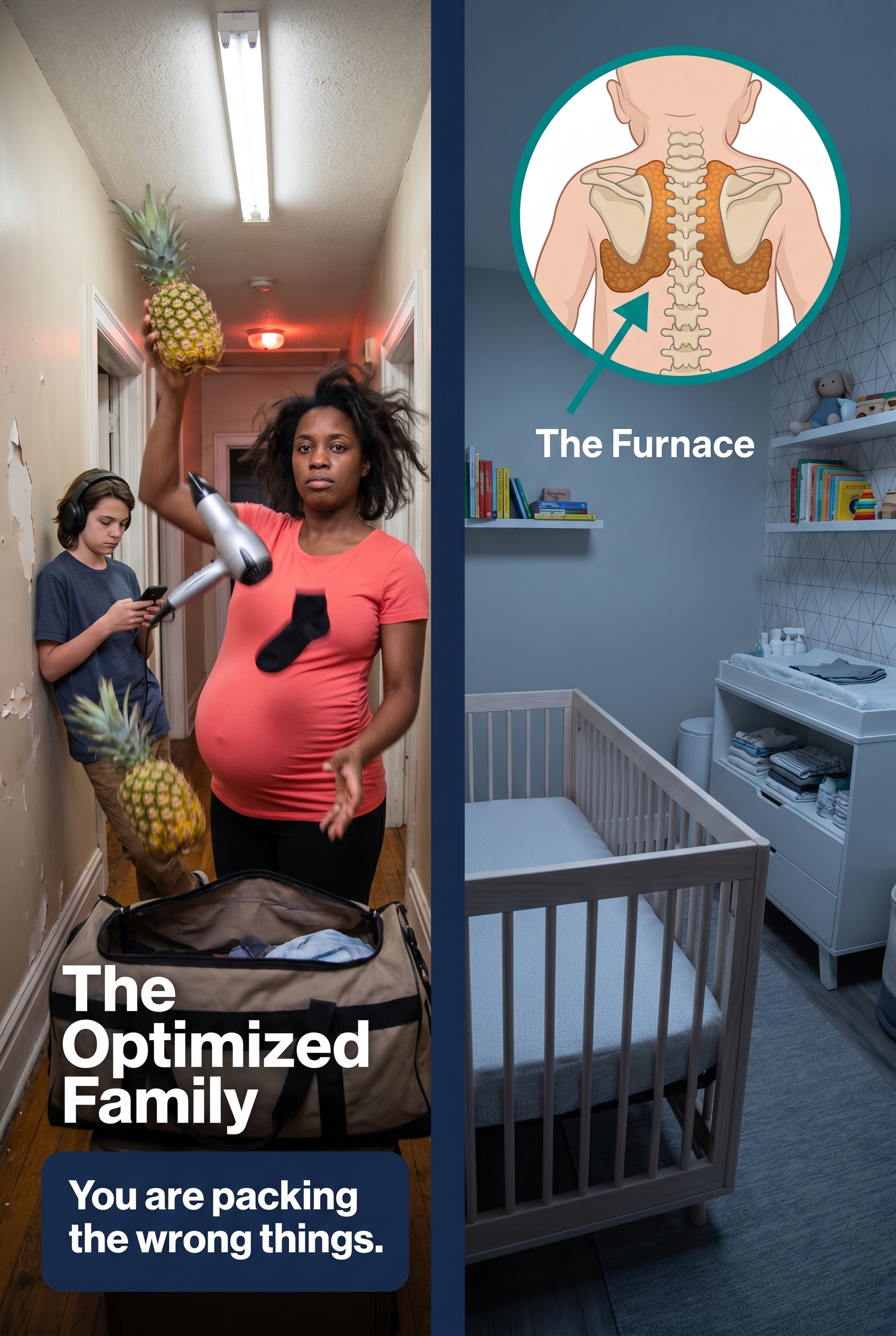
Brown adipose tissue is fundamentally different from the white fat adults store. It is packed with cellular powerhouses that burn calories to create heat without any muscle movement. This tissue is strategically located in specific zones:
- It sits squarely between the shoulder blades.
- It wraps protectively around the kidneys.
- It lines the major blood vessels of the neck.
The Developmental Math
The timeline for this biological furnace is strictly backloaded into the final four to six weeks of pregnancy. During this brief window, the fetus rapidly stockpiles brown fat. This is exactly why premature infants face such massive hurdles with temperature regulation; they simply missed the window to build their thermal reserves.
According to the World Health Organization, the estimated 13.4 million babies born preterm each year have significantly less of this crucial tissue. Once this brown fat is metabolized after birth, it is gone forever. Adults retain only trace amounts, meaning this is a strictly limited-time survival mechanism.
How To Ease The Transition
You can ease this thermal transition by managing their external environment so they do not rapidly burn through their brown fat reserves. Keeping the baby properly layered and utilizing your own body heat will reduce their need to metabolize this finite energy source during those critical first few days.
Here is how you actively manage the environment to protect their reserves:
- Keep the room temperature stable and draft-free.
- Add exactly one more layer of clothing than you are currently wearing.
- Practice frequent skin-to-skin contact to share your thermal regulation.
- Assess Core Temperature: Assess the baby’s temperature by feeling the back of their neck or chest, rather than their hands and feet.
- Layer Appropriately: Dress the newborn in exactly one more layer of clothing than you currently need to feel comfortable.
- Use Body Heat: Utilize skin-to-skin contact against your bare chest to actively share your body heat and stabilize their temperature.
- Control the Environment: Keep the room temperature steady and avoid placing the bassinet near drafty windows or active air vents.
Red Flags To Watch For
If a newborn rapidly depletes their brown fat from prolonged cold exposure, their blood sugar can drop to dangerous levels. This energy crash warrants an immediate call to your provider, as it can escalate quickly. Recognizing the difference between a normal chill and a critical energy failure is essential.
When brown fat is exhausted, the baby cannot generate heat, leading to potential hypoglycemia.
| Status | Visual Cue | Action Required |
|---|---|---|
| Normal | Hands and feet feel slightly cool | Monitor and add a light layer |
| Warning | Chest or back of neck feels cold | Initiate skin-to-skin contact |
| Red Flag | Lethargy, poor feeding, or blue lips | Call your provider immediately |
Frequently Asked Questions
Navigating newborn temperature regulation naturally brings up dozens of questions for exhausted parents. Understanding how brown fat works and when to intervene can help ease your mind. Below, we address the most common concerns regarding infant thermal stability and how to keep your baby safe and comfortable in those early days.
We do the research. You do the parenting.
Stop guessing at 2 AM. Get the visual playbook.
80+ peer-reviewed studies translated into visual shortcuts you can actually use, one-handed, with a baby attached to you.

Frequently Asked Questions
Why are my newborn’s hands and feet always cold?
Newborns have immature circulatory systems that prioritize keeping their core organs warm. It is completely normal for their hands and feet to feel chilly or look slightly blue. Always check the back of their neck or chest to gauge their true body temperature.
Can I help my baby build more brown fat after birth?
No, brown fat accumulation happens strictly in the womb during the final weeks of pregnancy. Once your baby is born, they can only burn the reserves they already have. Your goal is to help them conserve it by managing their external environment carefully.
How do I know if my baby is too cold?
If the back of your baby’s neck feels cold, they are likely struggling to maintain their temperature. Other signs include extreme lethargy or refusing to feed. These symptoms warrant an immediate call to your provider to ensure their energy reserves are stable.
Do adults still have brown fat to keep warm?
Adults retain only trace amounts of brown fat, mostly around the neck and collarbone. Because we have the neurological ability to shiver and generate heat through muscle friction, we no longer rely on these specialized fat deposits to survive temperature drops.
Why do premature babies need incubators?
Premature babies miss the critical third-trimester window where brown fat is stockpiled. Without this internal furnace, they cannot generate enough heat to survive the transition out of the womb. Incubators provide the precise external thermal support they need while they grow.