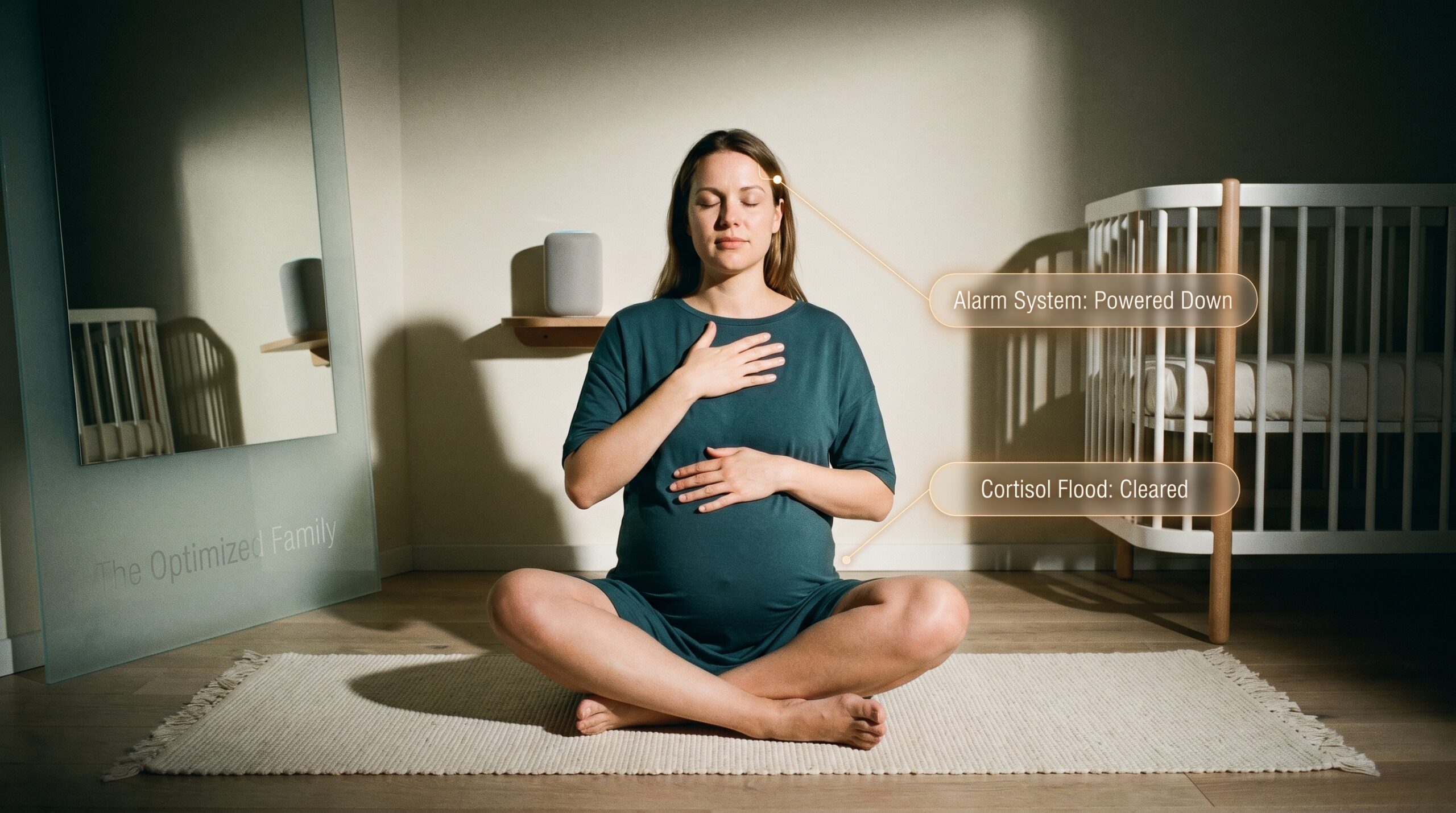
Key Highlights
- Prenatal yoga significantly lowers cortisol and baseline anxiety levels.
- Mindfulness breaks the exhausting anxiety-pain-tension cycle during late pregnancy.
- Daily practice is linked to shorter active labor durations.
- Gentle stretching improves pelvic floor flexibility for optimal labor positions.
- Just fifteen minutes of focused breathing drastically improves sleep quality.
We do the research. You do the parenting.
You are awake at 2 AM. The house is entirely silent, but your brain is currently running a high-definition, worst-case-scenario simulation of every possible labor outcome. Your hips ache, your lungs are compressed by a tiny foot, and sleep feels like a cruel joke you are no longer in on.
The Part Nobody Prepared You For
The third trimester brings an overwhelming wave of midnight anxiety and physical discomfort that nobody adequately warns you about. Your brain is constantly scanning for threats while your body runs out of room, making restful sleep feel entirely impossible just when you need it the most.
Everyone talks about the glowing bump, but very few people talk about the stark, staring-at-the-ceiling terror. This is not a personal failure of resilience. It is a biological reality. The sheer anticipation of childbirth, combined with the physical inability to get comfortable, creates a feedback loop of exhaustion. When you cannot sleep, you worry. When you worry, your body tenses. When your body tenses, the physical discomfort amplifies, guaranteeing you remain awake.
What Your Body Is Actually Doing
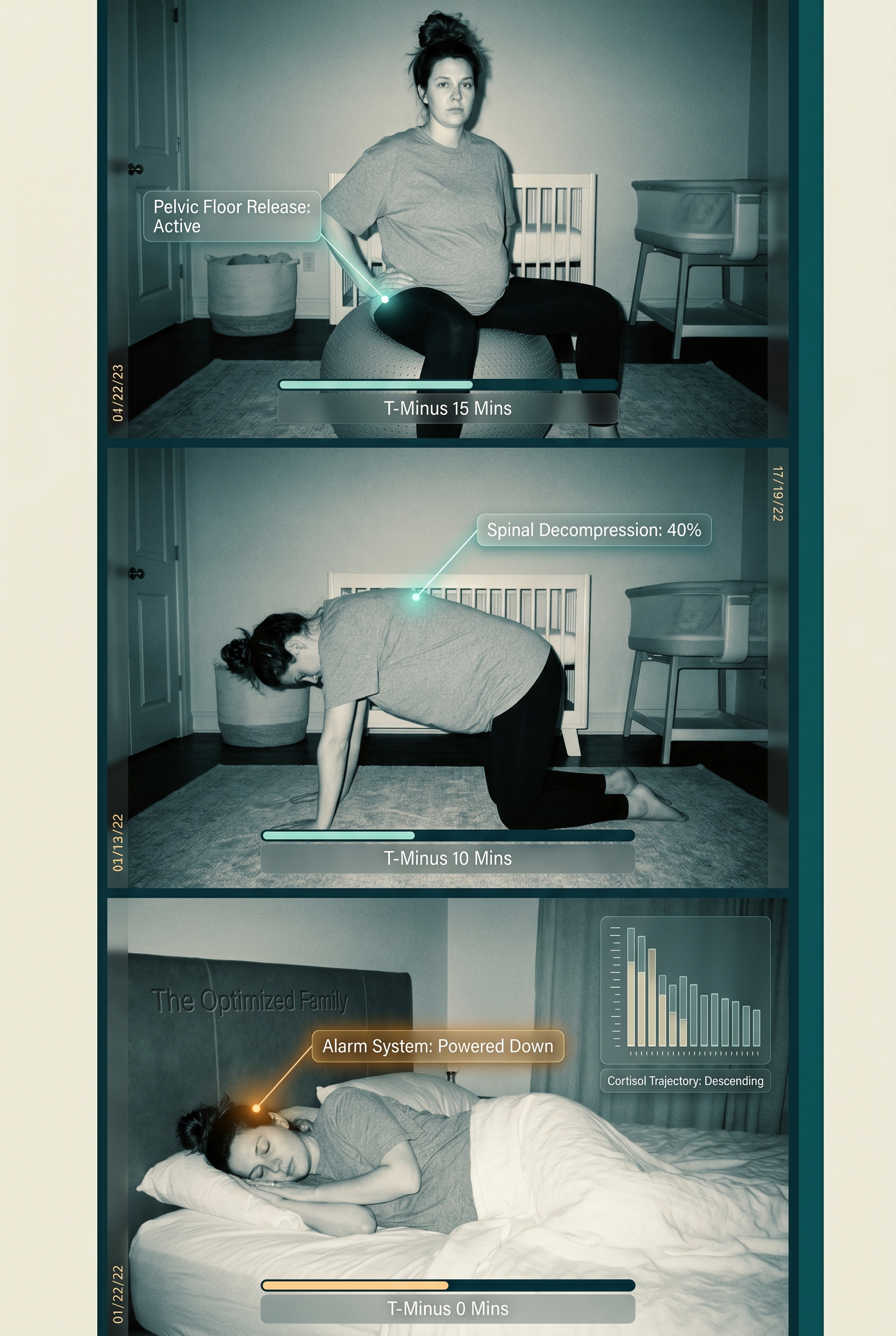
Your nervous system is currently trapped in a high-alert state, flooding your bloodstream with stress hormones like cortisol. At the exact same time, your physical structure is bearing maximum mechanical load, stretching your pelvic floor and lower back to their absolute limits as labor approaches.
When we look at the clinical data, the sheer volume of stress makes sense. However, research also points to a highly effective way to intercept this stress. A 2017 systematic review published in Complementary Therapies in Clinical Practice found that women who practiced prenatal yoga reported significantly lower levels of anxiety and depression than control groups. The mechanisms at work here are twofold. Physically, targeted movement strengthens the pelvic floor and teaches breath control. Psychologically, mindfulness actively stops your brain from catastrophizing every single physical sensation.
The Emotional Weight Of It
The mental burden of the third trimester often feels heavier than the physical belly. Watching the clock tick toward your due date triggers a unique psychological loop of catastrophizing, where every twinge or contraction sends your exhausted brain into a spiraling panic about incoming labor.
This is the anxiety-pain-tension cycle. It is a well-documented phenomenon where fear of pain actually causes your muscles to clench, which in turn makes the pain more intense, thereby generating more fear. To break this cycle, you have to convince your primitive brain that it is safe to power down. According to the Harvard Center on the Developing Child, implementing consistent mindfulness practices helps regulate the nervous system’s stress response, shifting you out of “fight or flight” and into a state where rest is actually viable.
What Helps (When Help Feels Impossible)
Clinical data shows that dedicating just fifteen to twenty minutes daily to gentle stretching and focused breathing can significantly reduce your baseline stress. These specific mindfulness and physical techniques lower cortisol, shorten active labor duration, and drastically improve your ability to sleep through the night.
You do not need to become a Zen master to pull this off. You just need to interrupt the panic loop. Here is how you survive the final stretch:
- Stop doom-scrolling labor stories at midnight.
- Dedicate a small window of time daily to focused physical release.
- Actively practice breathing mechanics before you are in active labor.
Consider implementing these specific movements into your daily survival routine:
- Cat-Cow Stretches: Relieves the immense mechanical load of the uterus hanging off your spine.
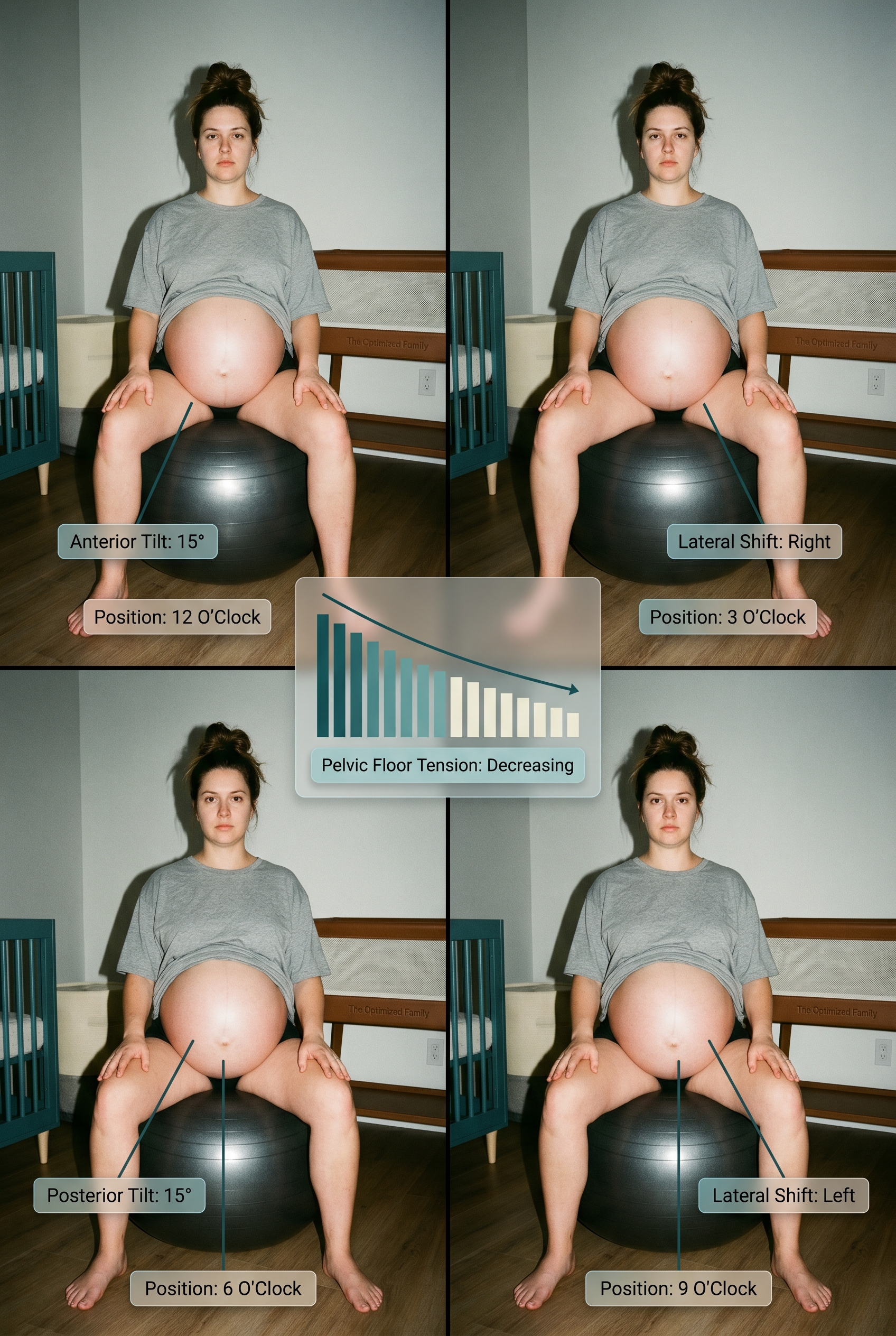
- Birth Ball Hip Circles: Opens the pelvis and eases deep joint pressure.
- Guided Body Scans: Forces the brain to observe physical sensations without assigning a panic response to them.
| Focus Area | Technique | Why It Works |
|---|---|---|
| Nervous System | Diaphragmatic Breathing | Manually signals the vagus nerve to lower your heart rate. |
| Pelvic Floor | Hip Circles on a Birth Ball | Improves tissue flexibility for optimal labor positioning. |
| Lower Back | Cat-Cow Stretches | Shifts the weight of the baby off your compressed nerves. |
- Find Your Position: Settle into a comfortable seated position on a birth ball, or lie safely on your left side supported by pillows.
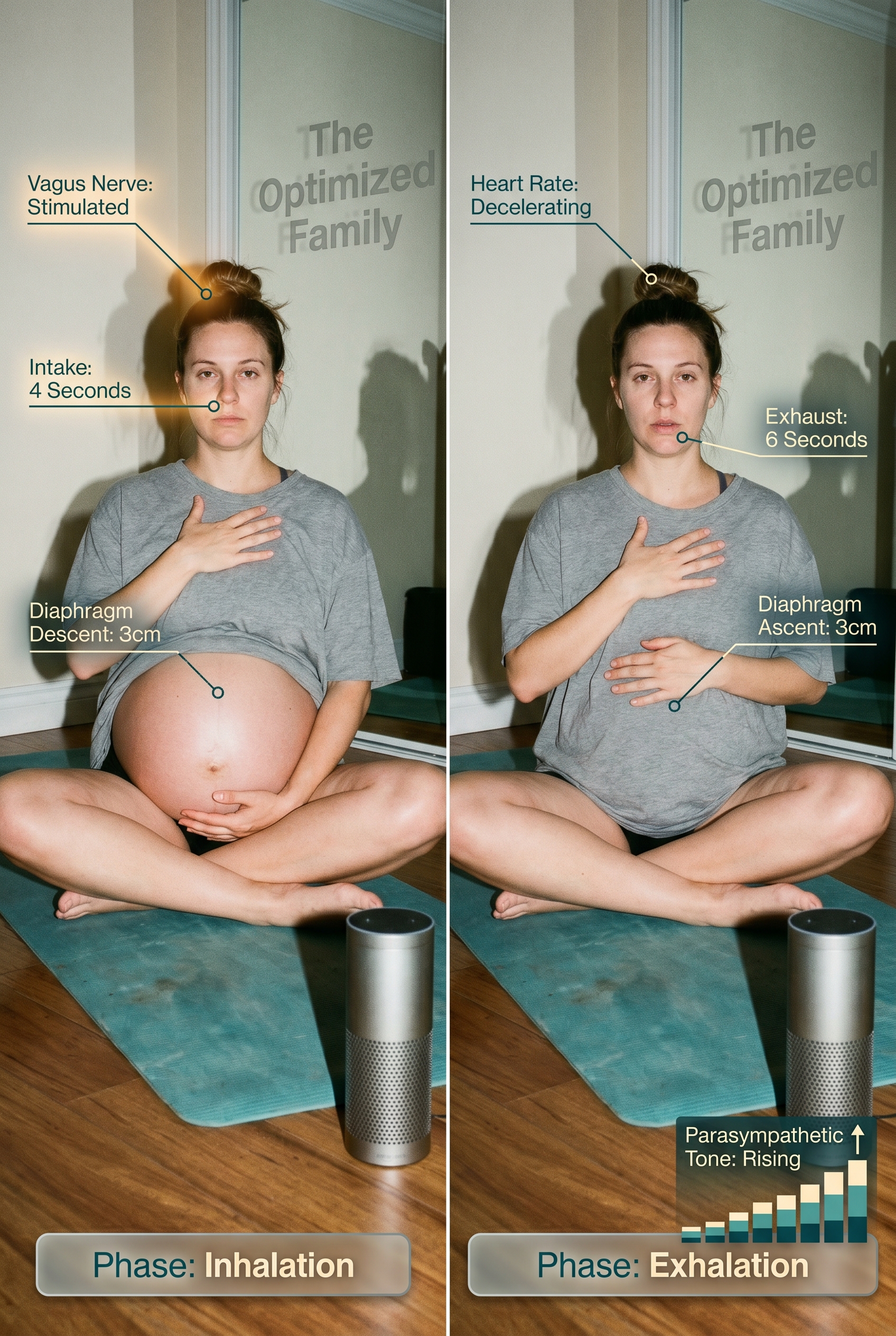
- Inhale Deeply: Breathe in slowly through your nose for a strict count of four, allowing your belly to expand outward rather than raising your shoulders.
- Exhale Slowly: Release the air slowly through parted lips for a count of six, consciously dropping your jaw and relaxing your facial muscles.
- Repeat and Anchor: Continue this cycle for five full minutes, focusing entirely on the physical sensation of your ribs expanding and contracting.
Red Flags That Cannot Wait
While anxiety and physical discomfort are standard features of late pregnancy, certain symptoms warrant an immediate call to your provider. Do not attempt to breathe through sudden fluid loss, decreased fetal movement, or rhythmic cramping that intensifies, as these require urgent professional evaluation and guidance.
Mindfulness is a phenomenal tool for coping with the baseline misery of the third trimester, but it is not a substitute for obstetrical care. If your intuition tells you something is fundamentally wrong, or if you experience bleeding, severe headaches, or visual disturbances, bypass the yoga mat and contact your healthcare provider immediately.
We do the research. You do the parenting.
Stop guessing at 2 AM. Get the visual playbook.
80+ peer-reviewed studies translated into visual shortcuts you can actually use, one-handed, with a baby attached to you.

Frequently Asked Questions
Is it too late to start yoga in the third trimester?
It is absolutely never too late to start gentle prenatal stretching. Even if you have never stepped foot on a yoga mat, beginning a fifteen-minute daily practice in your final weeks can significantly reduce stress hormones and improve your overall sleep quality before labor begins.
Will mindfulness actually make labor hurt less?
Mindfulness does not eliminate the physical sensation of labor, but it alters your perception of it. By breaking the anxiety-pain-tension cycle, focused breathing helps your brain observe physical sensations without catastrophizing, which clinical data shows can lower your overall reliance on epidural interventions.
How long do I need to practice each day to see benefits?
You do not need an hour-long studio class to see real benefits. Research indicates that just fifteen to twenty minutes of daily focused breathing and gentle movement is enough to lower cortisol levels, ease pelvic pressure, and help you achieve longer stretches of uninterrupted sleep.
Can stretching cause preterm labor?
Gentle, pregnancy-specific stretching does not cause preterm labor. In fact, studies show that regular prenatal yoga is associated with lower rates of premature birth. However, you should always avoid deep twists, high-impact movements, or any positions that cause sharp pain or dizziness during your practice.
What if I cannot stop my mind from racing during meditation?
A racing mind is entirely normal and expected. The goal is not to force your brain into total silence, but simply to notice when your thoughts drift to labor anxieties and gently guide your focus back to the physical sensation of your breath expanding your ribs.