Key Highlights
- Third-trimester androgen hormones trigger severe oil production and clogged pores.
- Many standard acne products contain teratogens and are unsafe during pregnancy.
- Retinoids and high-concentration salicylic acid must be avoided entirely.
- Azelaic acid and low-concentration benzoyl peroxide offer safe, effective relief.
- Gentle, fragrance-free cleansing twice daily provides the best baseline defense.
- Postpartum hormone normalization usually resolves these breakouts within a few months.
We do the research. You do the parenting.
The Unspoken Reality
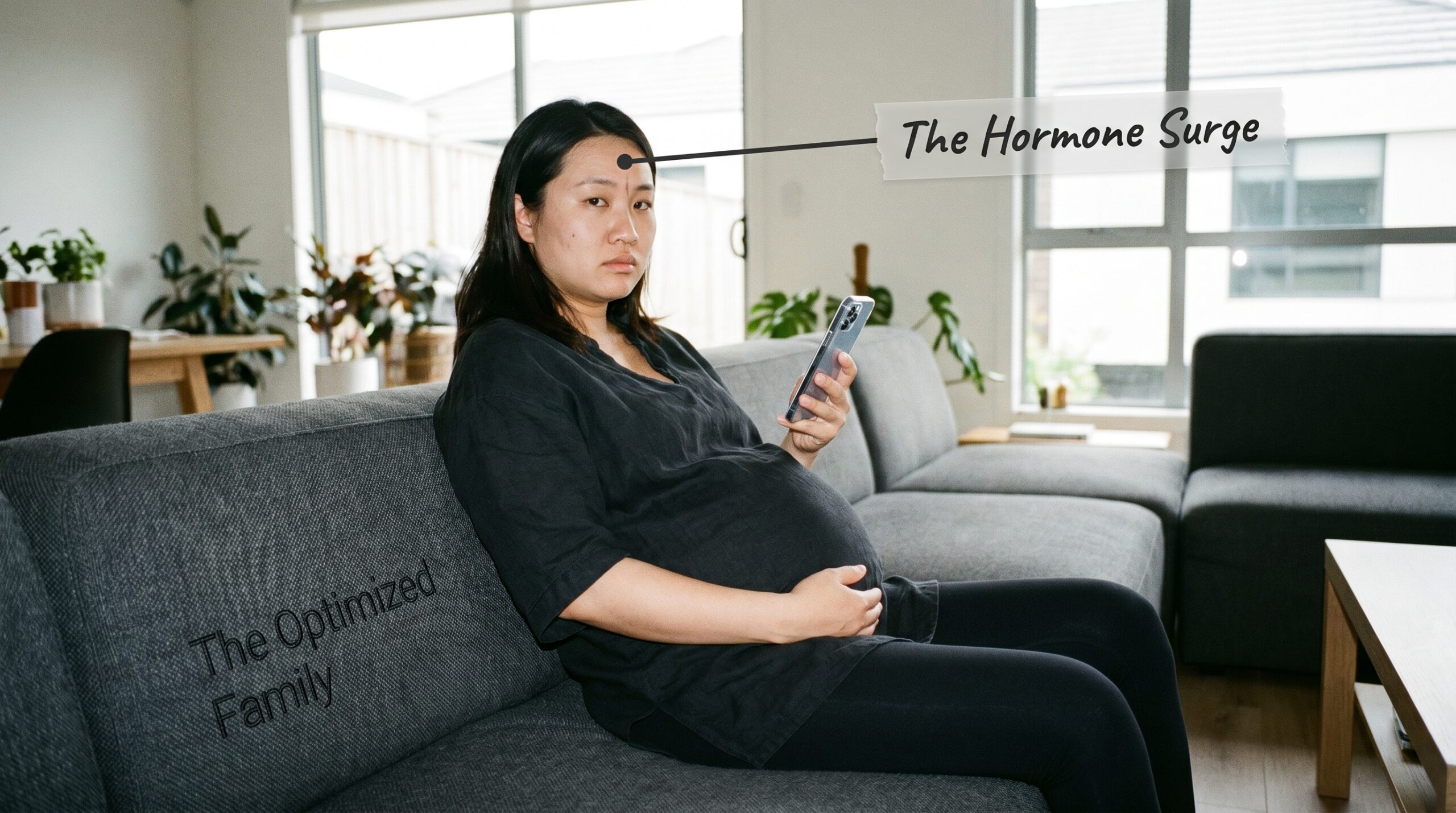
The unspoken reality of the third trimester is that your face might suddenly resemble a high school yearbook photo. Surging pregnancy hormones can trigger severe breakouts, creating a frustrating scenario where your skin rebels just as your options for fixing it become severely restricted.
Just when you thought your teenage skin struggles were buried in the past alongside frosted tips and dial-up internet, the third trimester arrives to humble you. You are exhausted, your center of gravity is entirely compromised, and now you have to deal with aggressive facial blemishes. It is a cruel biological joke.
The Biological Toll
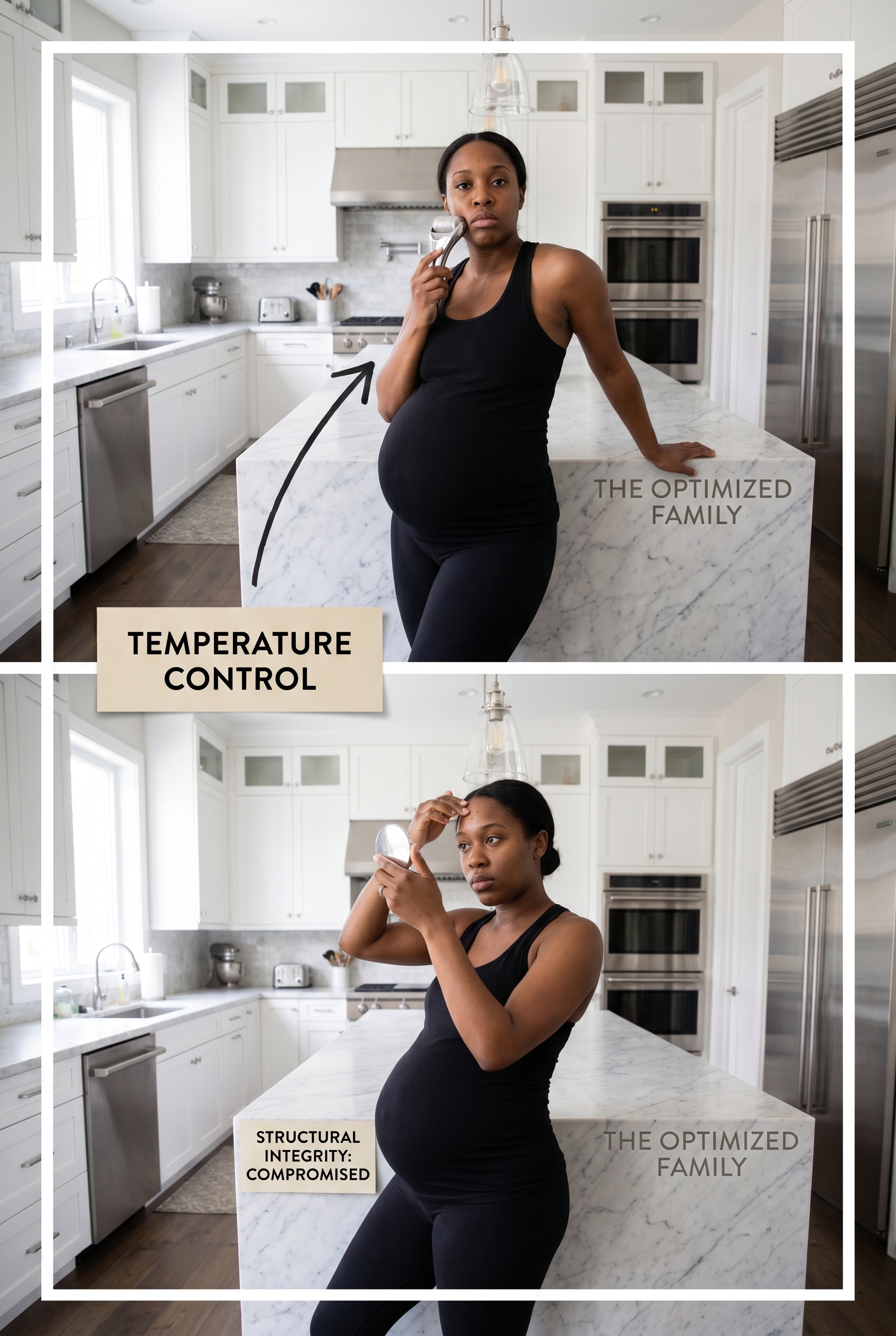
The biological toll originates from skyrocketing androgen hormones during late pregnancy. These hormones overstimulate your sebaceous glands, prompting them to overproduce sebum. This excess oil mixes with dead skin cells to clog your pores, creating the perfect breeding ground for acne-causing bacteria.
Your body is currently operating as a high-output hormone factory. According to the American College of Obstetricians and Gynecologists, acne is incredibly common as these androgen levels peak. The excess sebum acts like glue, trapping everyday debris inside your pores.
This is not because you are washing your face wrong. This is simple, brutal biology. Your glandular system is in overdrive, and your face is taking the collateral damage.
What Nobody Tells You
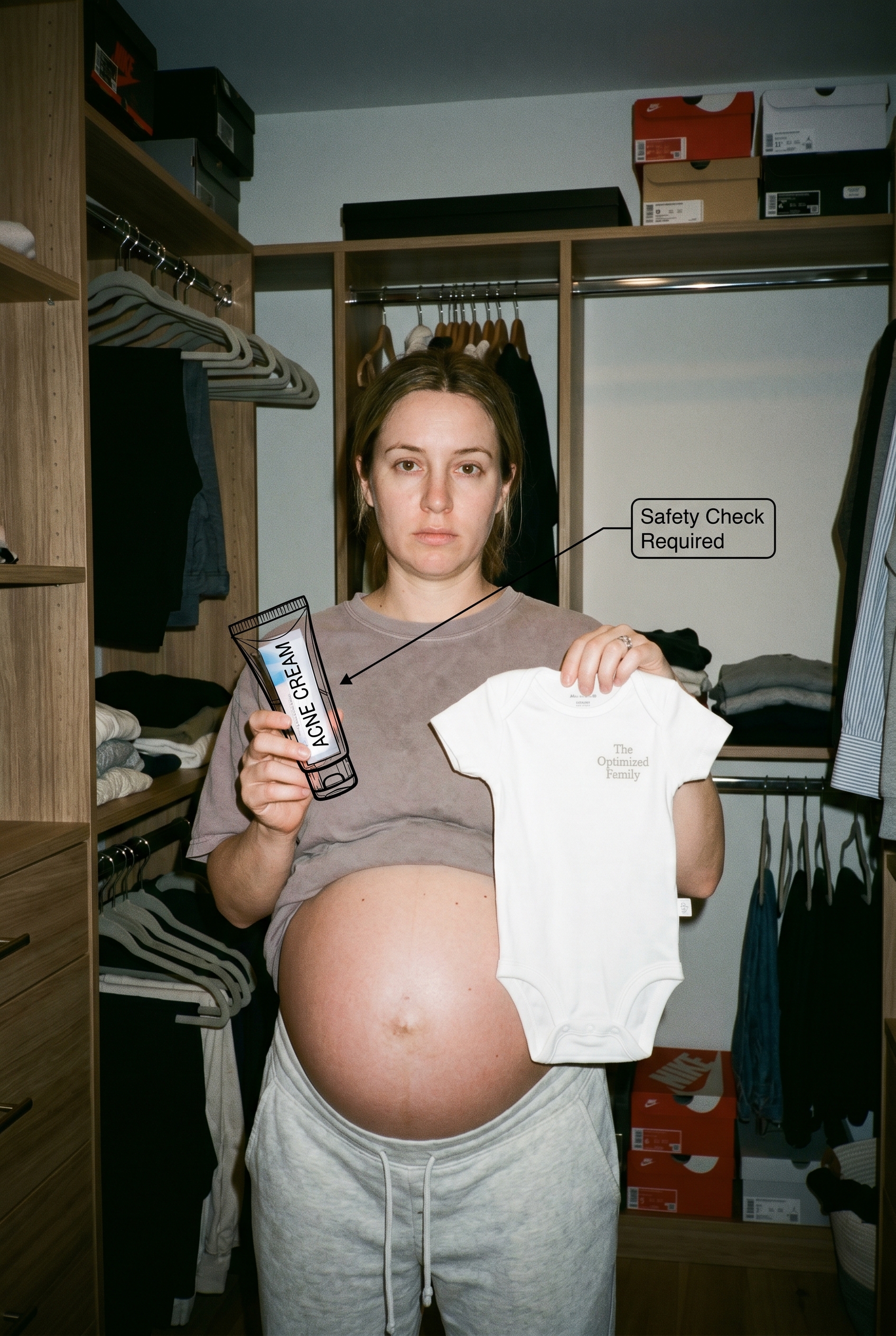
What nobody tells you is that your go-to skincare arsenal is suddenly off-limits. The most effective products for clearing breakouts, particularly retinoids, are classified as teratogens that can cause severe fetal harm. You are left fighting a hormonal fire with a squirt gun.
The true cruelty of pregnancy acne is the restriction on how you can handle it. The heavy hitters of the skincare world are strictly prohibited. You cannot simply nuke the site from orbit with your usual preferred chemical exfoliants.
| Skincare Ingredient | Pregnancy Status | Why It Matters |
|---|---|---|
| Retinoids (Tretinoin, Isotretinoin) | Stop Immediately | Linked to severe fetal development issues. |
| High-Dose Salicylic Acid | Avoid | High topical doses pose unnecessary risks. |
| Azelaic Acid | Safe Option | Research supports safety for daily topical use. |
| Glycolic Acid | Safe Option | Does not penetrate deeply into the bloodstream. |
Actionable Mitigation
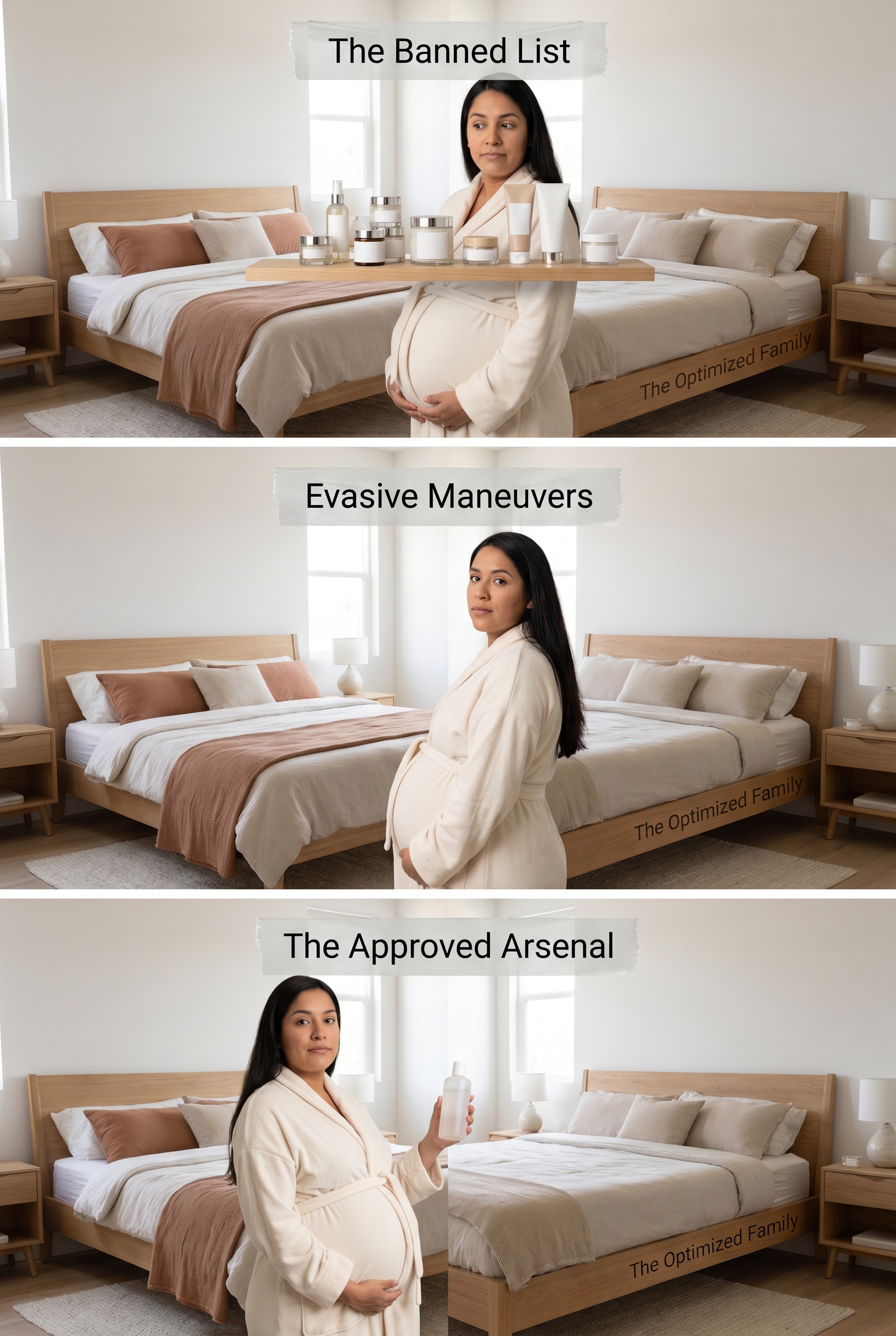
Actionable mitigation relies on a stripped-down, highly conservative skincare routine. You can safely ease breakouts by washing twice daily with a mild, fragrance-free cleanser, using topical azelaic acid, and applying low-concentration benzoyl peroxide strictly as an isolated spot application for stubborn blemishes.
Since you cannot use the industrial-strength options, consistency with gentle products is your only path forward. Research shows that maintaining benzoyl peroxide concentrations between 2.5 and 5 percent minimizes systemic absorption Source.
Here is your revised survival protocol:
- Ditch the complex, multi-step routines.
- Read every single ingredient label in your bathroom.
- Focus entirely on skin barrier support rather than aggressive scrubbing.
Keep these safe tools in your rotation:
- Azelaic acid is your primary defense for widespread redness.
- Glycolic acid cleansers work well for gentle, surface-level exfoliation.
- Low-concentration benzoyl peroxide should only touch the specific blemish, not your whole face.
- Wash with a mild cleanser: Use a gentle, fragrance-free face wash twice daily to clear surface oil without stripping the skin barrier.
- Apply azelaic acid: Incorporate a topical azelaic acid serum into your morning routine, which research confirms is safe during pregnancy.
- Spot-target with benzoyl peroxide: Apply a very low-concentration (2.5 to 5 percent) benzoyl peroxide cream strictly to individual blemishes as needed.
- Exfoliate with glycolic acid: Swap harsh physical scrubs for a mild glycolic acid wash once a week to gently clear dead skin cells.
When You Need A Doctor
You need a doctor when over-the-counter options fail to relieve severe, painful cystic breakouts, or if you notice signs of skin infection like spreading redness. A dermatologist can offer pregnancy-safe, professional-grade alternatives to help manage extreme flare-ups without endangering your baby.
There is no prize for suffering through painful cystic acne in silence. If your skin is physically hurting or the breakouts are impacting your mental health, loop in a professional. Remember, for the vast majority of people, this specific brand of hormonal chaos clears up within a few months postpartum as your body finally returns to its baseline.
We do the research. You do the parenting.
Stop guessing at 2 AM. Get the visual playbook.
80+ peer-reviewed studies translated into visual shortcuts you can actually use, one-handed, with a baby attached to you.

Frequently Asked Questions
Why is my acne worse in the third trimester?
Your body experiences a massive surge in androgen hormones during the third trimester. These hormones stimulate your sebaceous glands to overproduce oil. When this excess oil mixes with dead skin cells, it clogs your pores and causes significant breakouts across your face and body.
Can I use my regular salicylic acid face wash?
You should avoid high concentrations of salicylic acid during pregnancy. While some providers permit very low-concentration washes, it is generally safer to switch to a mild, fragrance-free cleanser or a glycolic acid alternative to reduce risks while still managing your daily oil production.
Are pimple patches safe to use while pregnant?
Basic hydrocolloid pimple patches are generally safe because they simply absorb fluid without introducing active ingredients into your bloodstream. However, you must carefully read the packaging to ensure they do not contain hidden, unsafe additives like high-dose salicylic acid or prohibited retinoids.
Will this third-trimester acne go away after birth?
Yes, for the vast majority of parents, pregnancy-induced breakouts resolve naturally within a few months postpartum. Once your body delivers the baby, your hormone levels begin to normalize, which drastically reduces oil production and allows your skin to slowly clear up on its own.
Is benzoyl peroxide completely banned until I deliver?
Benzoyl peroxide is not completely banned, but you must use it cautiously. Research indicates that low concentrations between 2.5 and 5 percent are generally safe when used sparingly as a spot application. Always consult your provider before adding it to your routine.