Key Highlights
- High estrogen keeps 85 to 95 percent of your hair in the growth phase.
- Daily hair shedding drops dramatically from 100 hairs down to just 10 or 20.
- Your hair is not actually multiplying; it is just refusing to fall out.
- Estrogen crashes postpartum, triggering massive shedding known as telogen effluvium.
- Full hair regrowth and normalization typically occurs within six to twelve months.
We do the research. You do the parenting.
The Part Nobody Prepared You For
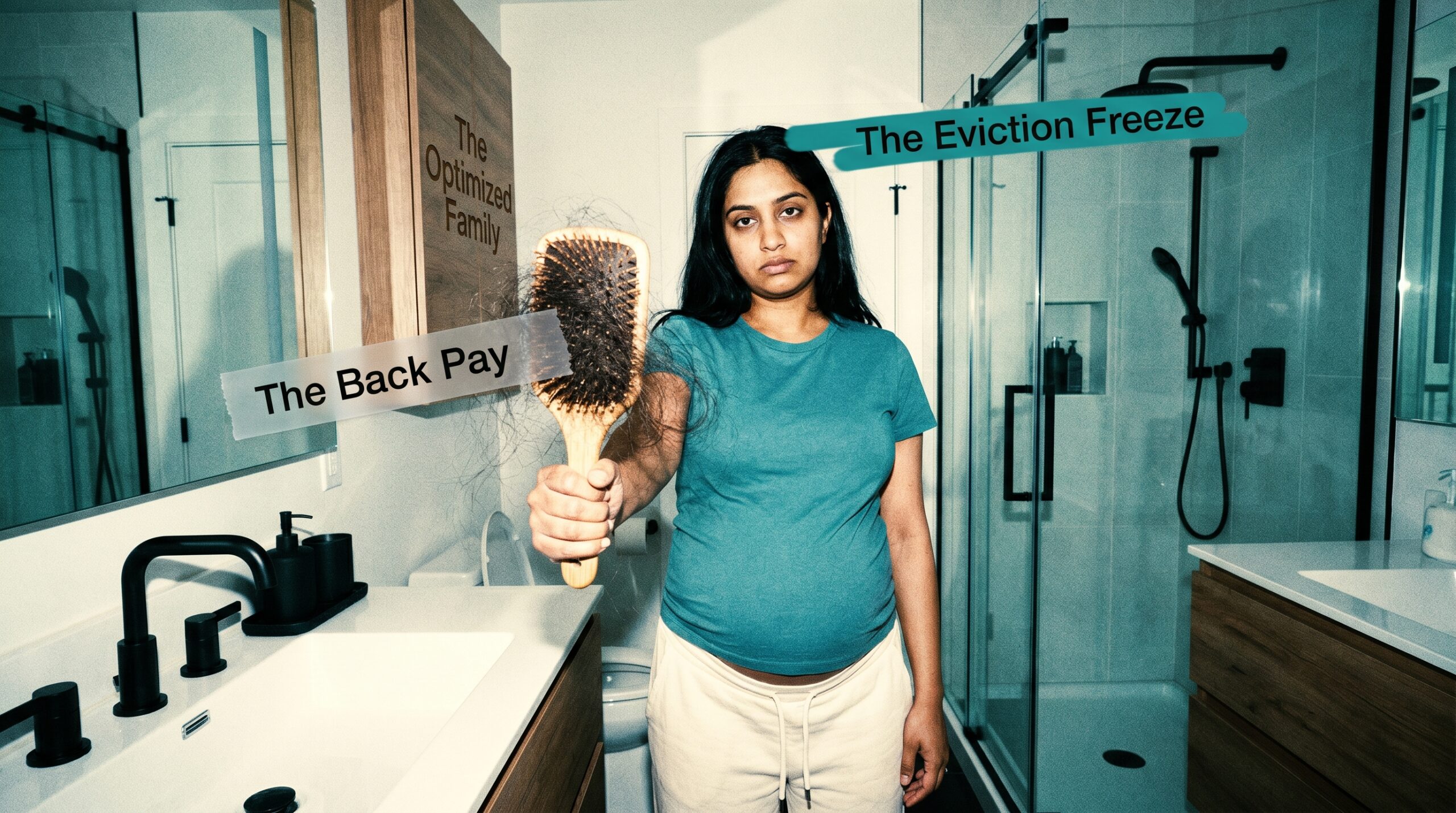
Right now, your hair probably looks thicker and more luxurious than it ever has in your entire life. You are not imagining this sudden transformation. High pregnancy hormones have temporarily paused your normal hair shedding cycle, essentially trapping your hair on your head until after your baby arrives.
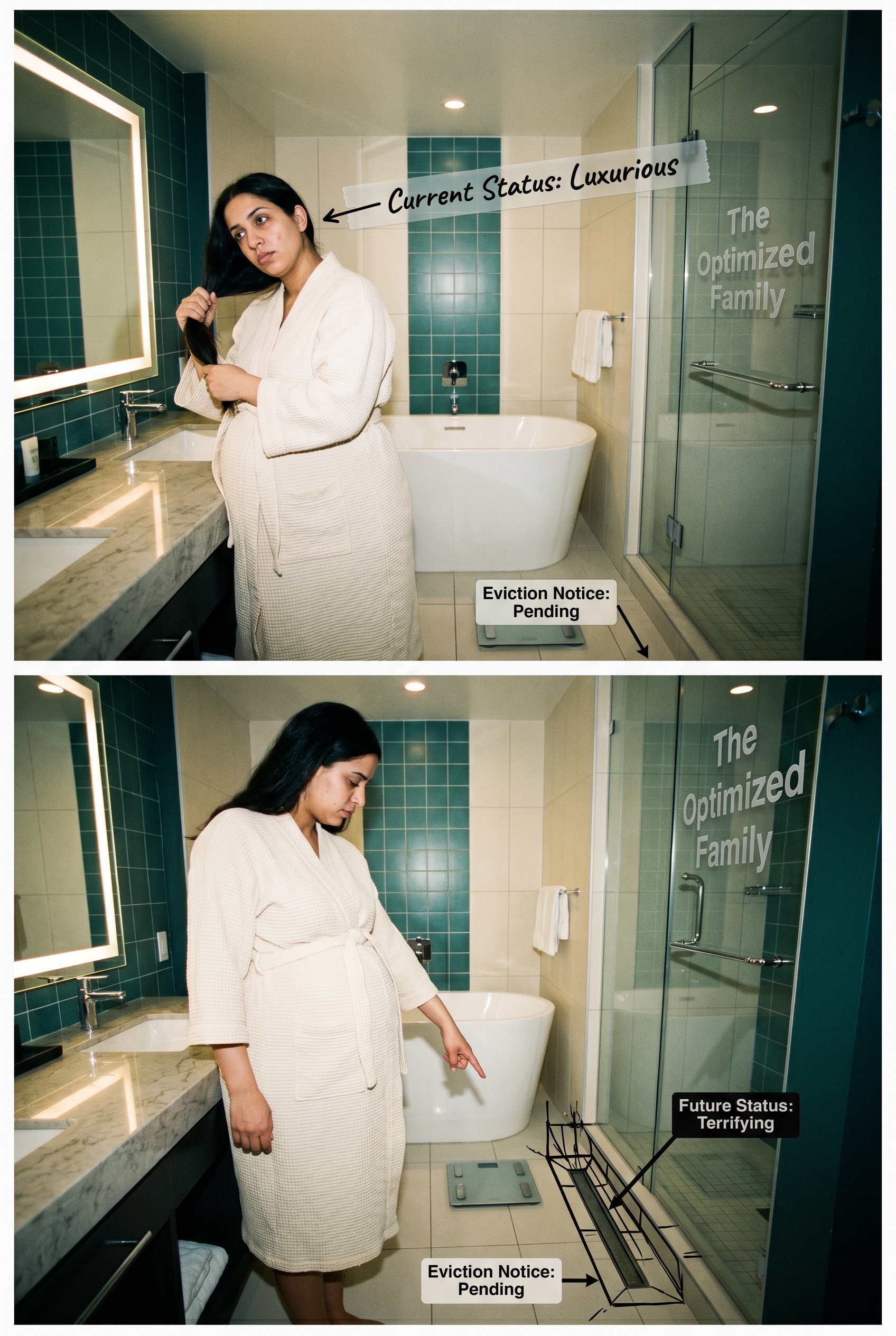
You are currently starring in your own glowing shampoo commercial. Your ponytail is robust, your part is dense, and your shower drain is remarkably clear. But as the voice of the Optimized Family, we owe you the uncomfortable truth: this is a biological loan, and the bill comes due a few months after delivery.
What Your Body Is Actually Doing
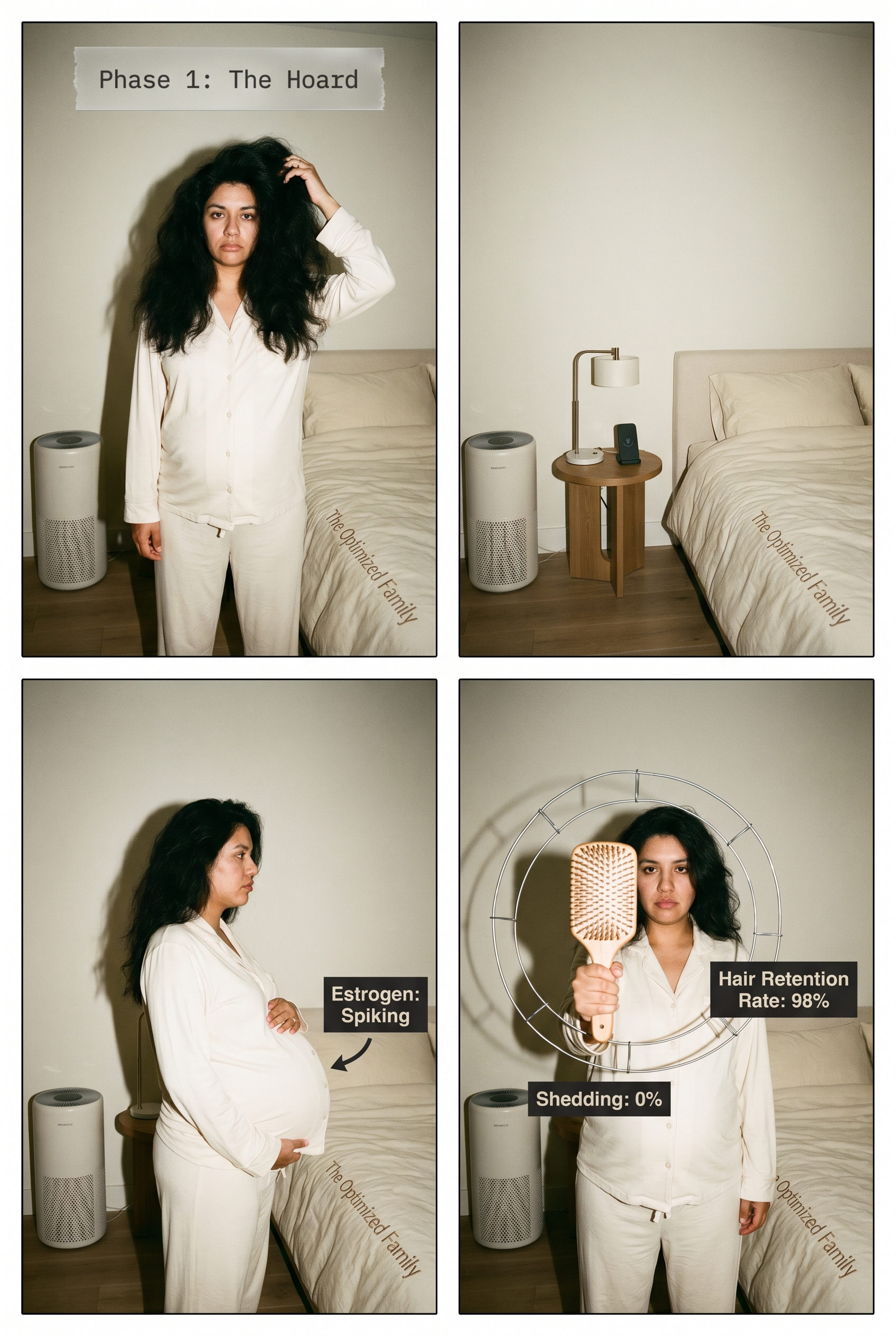
Normally, your hair operates on a strict schedule of growing, resting, and falling out. During pregnancy, elevated estrogen levels hijack this cycle, forcing up to 95 percent of your hair to stay in the active growth phase and drastically reducing the amount of hair you lose every day.
Under normal circumstances, you shed about 50 to 100 hairs a day Source. During the third trimester, that number drops to maybe 10 or 20. Your hair is not magically multiplying; it is just hoarding itself. The estrogen is acting like a bouncer at a club, refusing to let any hair follicles exit the building.
The Emotional Weight Of It
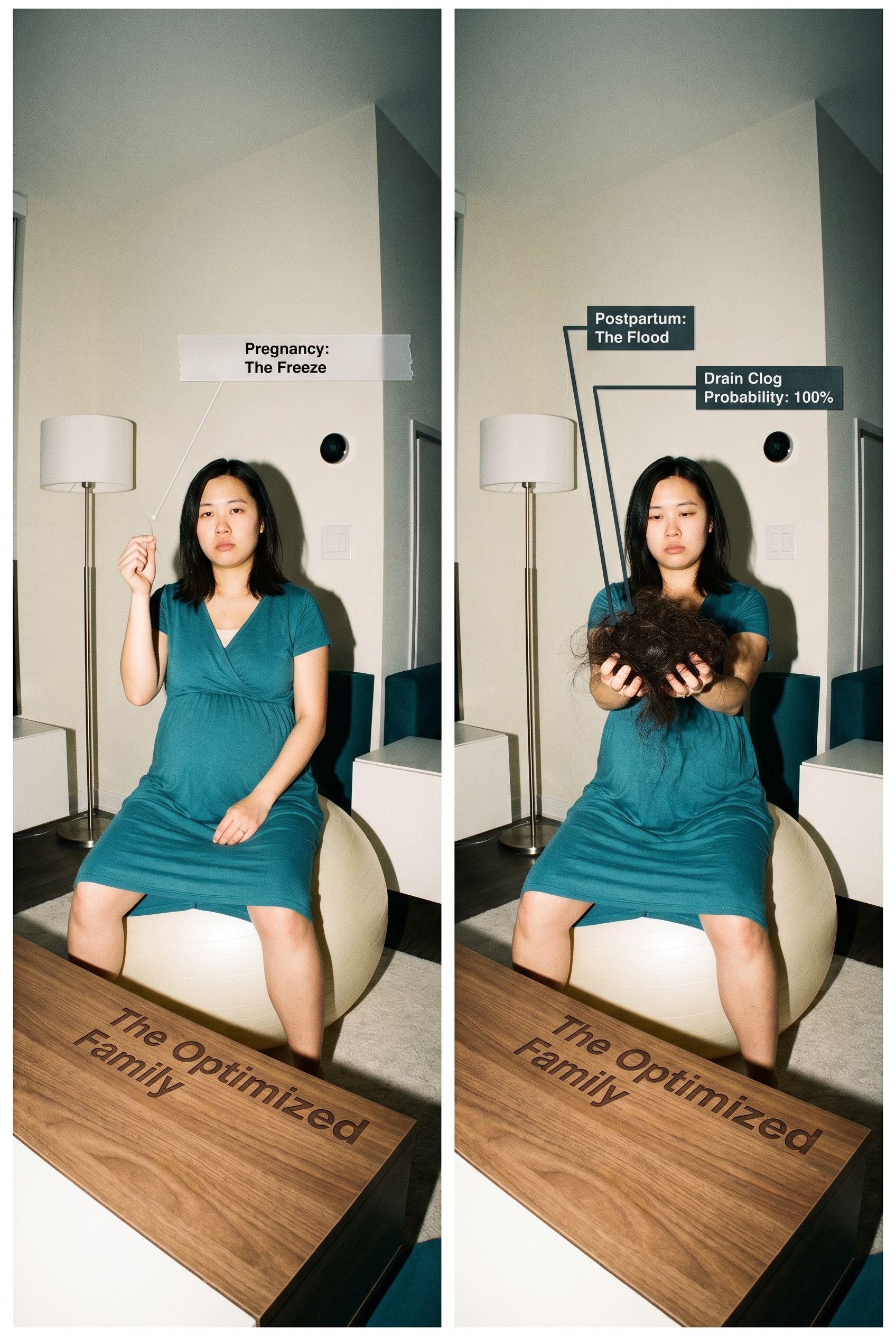
Losing your temporary pregnancy hair around three to four months postpartum feels incredibly alarming and often triggers intense anxiety. Watching clumps of hair circle the shower drain is visually terrifying, especially when you are already navigating the exhaustion and massive identity shifts of early parenthood.
It feels like a betrayal. Just when you are at your most sleep-deprived, your body decides to dump nine months’ worth of retained hair all at once. This phenomenon is called telogen effluvium, and it affects up to 50 percent of postpartum individuals Source.
| Phase | What Is Happening | Visual Result | Emotional Status |
|---|---|---|---|
| Third Trimester | Estrogen keeps 95% of hair in the growth phase. | Maximum thickness. | Smug invincibility. |
| 3-4 Months Postpartum | Estrogen crashes; trapped hair enters shedding phase. | Clumps in the brush. | Panic at the disco. |
| 6-12 Months Postpartum | Follicles reset to normal growth cycles. | Flyaways and baby hairs. | Cautious optimism. |
What Helps (When Help Feels Impossible)
While you cannot stop the biological shedding process, you can manage the physical reality and protect the hair that remains. Focus on gentle hair care routines, maintain a nutrient-rich diet, and lean on cosmetic strategies to reduce the visual impact while you wait for the natural regrowth cycle.
Accepting the timeline is your best defense. Full regrowth typically occurs within 6 to 12 months postpartum Source. In the meantime, you need to minimize physical stress on your fragile hair.
Things you should actively avoid right now:
- Scraping your hair back into tight, tension-heavy ponytails.
- Using high-heat styling tools that cause the hair shaft to snap.
- Vigorously towel-drying your hair after a shower.
Instead, understand the chronological reality of what your scalp is doing:
- Birth to 3 Months: Enjoy the lingering thickness. The estrogen is dropping, but the hair hasn’t realized it yet.
- 3 to 6 Months: The great shedding begins. Keep your detangling gentle and your expectations realistic.
- 6 to 12 Months: The shedding stops, and the halo of tiny, unmanageable baby hairs arrives as your new growth asserts itself.
- Switch to a wide-toothed comb: Use a wide-toothed comb exclusively on wet hair to minimize tension on fragile hair follicles during detangling.
- Swap out your hair ties: Replace tight elastic bands with soft silk or satin scrunchies to reduce physical breakage on the hair shaft.
- Maintain your prenatal vitamins: Keep taking your daily prenatal vitamins to support the underlying nutritional needs of the new hair follicles entering their growth phase.
- Adjust your haircut: Adopt a shorter, layered haircut to remove heavy, pulling length and create the illusion of immediate volume.
Red Flags That Cannot Wait
Postpartum hair shedding is completely normal, but sudden bald patches or shedding accompanied by physical pain warrant an immediate call to your provider. These symptoms can indicate underlying thyroid issues or nutritional deficiencies that require professional evaluation rather than waiting for the shedding to simply pass.
If your hair is falling out in perfectly round, completely smooth patches, or if your scalp feels inflamed, itchy, or tender to the touch, step away from the internet and contact your healthcare provider. While standard telogen effluvium thins your hair all over your head, localized bald spots or physical discomfort are distinct signals that your body needs clinical attention.
We do the research. You do the parenting.
Stop guessing at 2 AM. Get the visual playbook.
80+ peer-reviewed studies translated into visual shortcuts you can actually use, one-handed, with a baby attached to you.

Frequently Asked Questions
Will I go completely bald from postpartum hair loss?
No, you will not go completely bald from standard postpartum shedding. While it visually feels like you are losing everything, your body is simply shedding the excess hair it retained during pregnancy. Your overall hair volume will eventually return to your normal, pre-pregnancy baseline.
Can any shampoos stop the hair from falling out?
No topical shampoos or serums can stop postpartum hair shedding. The shedding is driven by internal hormonal shifts, not surface-level scalp conditions. Volumizing shampoos can help your remaining hair look thicker, but they cannot physically alter the biological shedding timeline your body must complete.
How long does the extreme shedding phase last?
The most intense period of hair shedding typically begins around three to four months postpartum and can last for several months. For most individuals, the shedding slows down and normal hair growth cycles fully resume within six to twelve months after delivering your baby.
Should I keep taking my prenatal vitamins postpartum?
Continuing your prenatal vitamins after delivery is highly encouraged, especially if you are nursing. While vitamins will not stop the hormonal hair drop, they help ensure your body has the necessary baseline nutrients to support the new hair follicles as they begin their growth phase.
Does breastfeeding make postpartum hair loss worse?
Breastfeeding does not cause or worsen postpartum hair shedding. The shedding is entirely triggered by the sharp drop in estrogen levels that occurs immediately after childbirth, regardless of how you feed your baby. Nursing simply continues a different set of hormonal processes in your body.