Key Highlights
- Cortisol levels triple during the third trimester to prepare your body for labor.
- This hormonal surge is a biological necessity for maturing your baby’s lungs.
- Elevated cortisol drastically alters sleep architecture, reducing deep sleep and increasing light sleep.
- The surge causes a wired-but-tired sensation, making late-night anxiety incredibly common.
- You cannot lower this baseline hormone, but you can manage the physical symptoms.
- Limiting midnight doomscrolling is critical for surviving this high-alert biological state.
We do the research. You do the parenting.
The Unspoken Reality
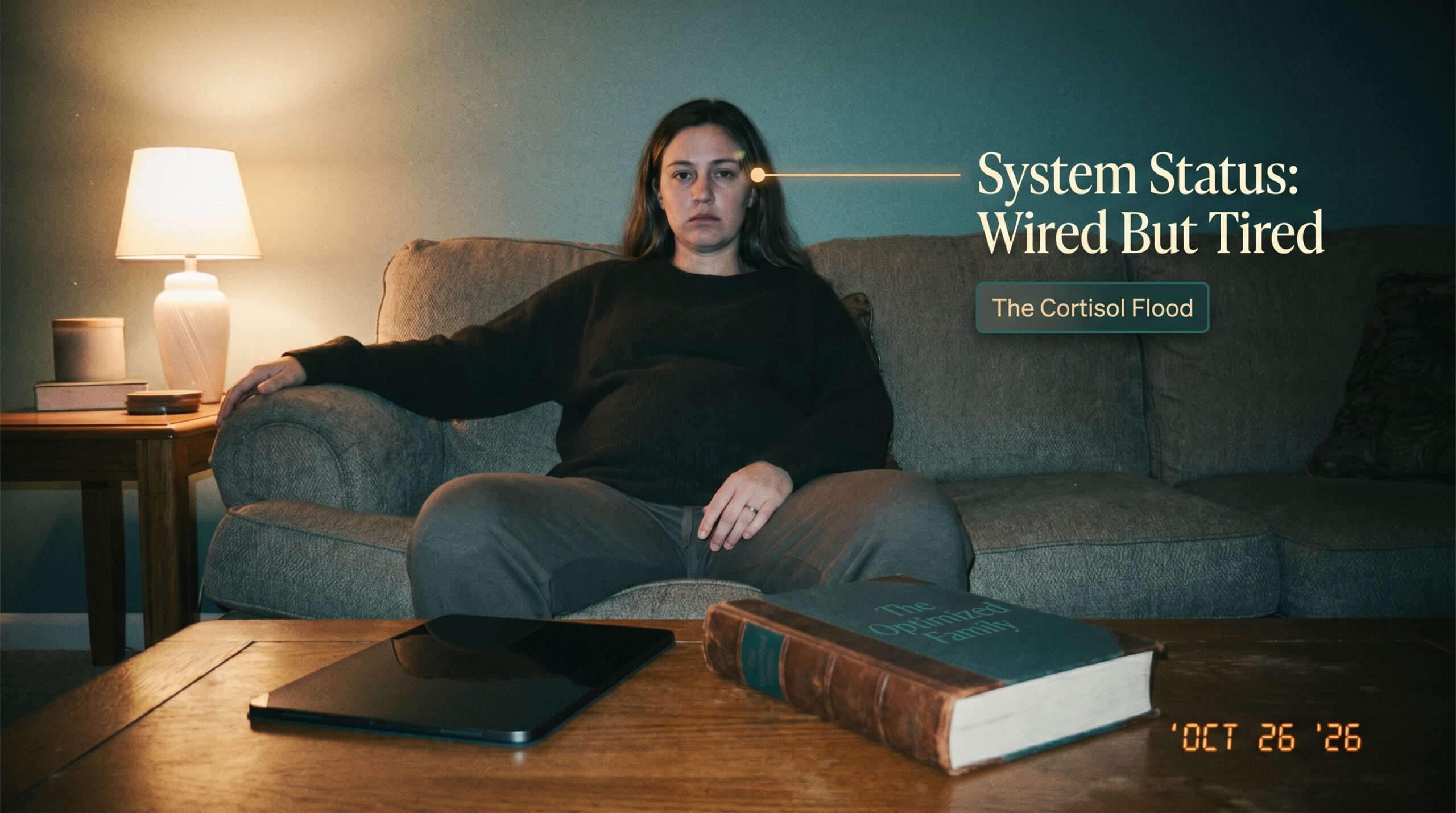
The unspoken reality of the third trimester is that your brain feels like a browser with ninety tabs open, all playing different warning sirens. This is not a personal failure to relax; it is a forced biological override. Your body is flooding your system with stress hormones to prepare for birth.
You are exhausted. Your bones ache, your organs are squished, and all you want to do is sleep. Yet, the moment your head hits the pillow, your eyes snap open. You suddenly need to know the statistical probability of a breech birth, or whether you bought the right brand of diaper cream. This is the cruel irony of late-stage pregnancy: you are too tired to function, but too wired to rest.
The Biological Toll
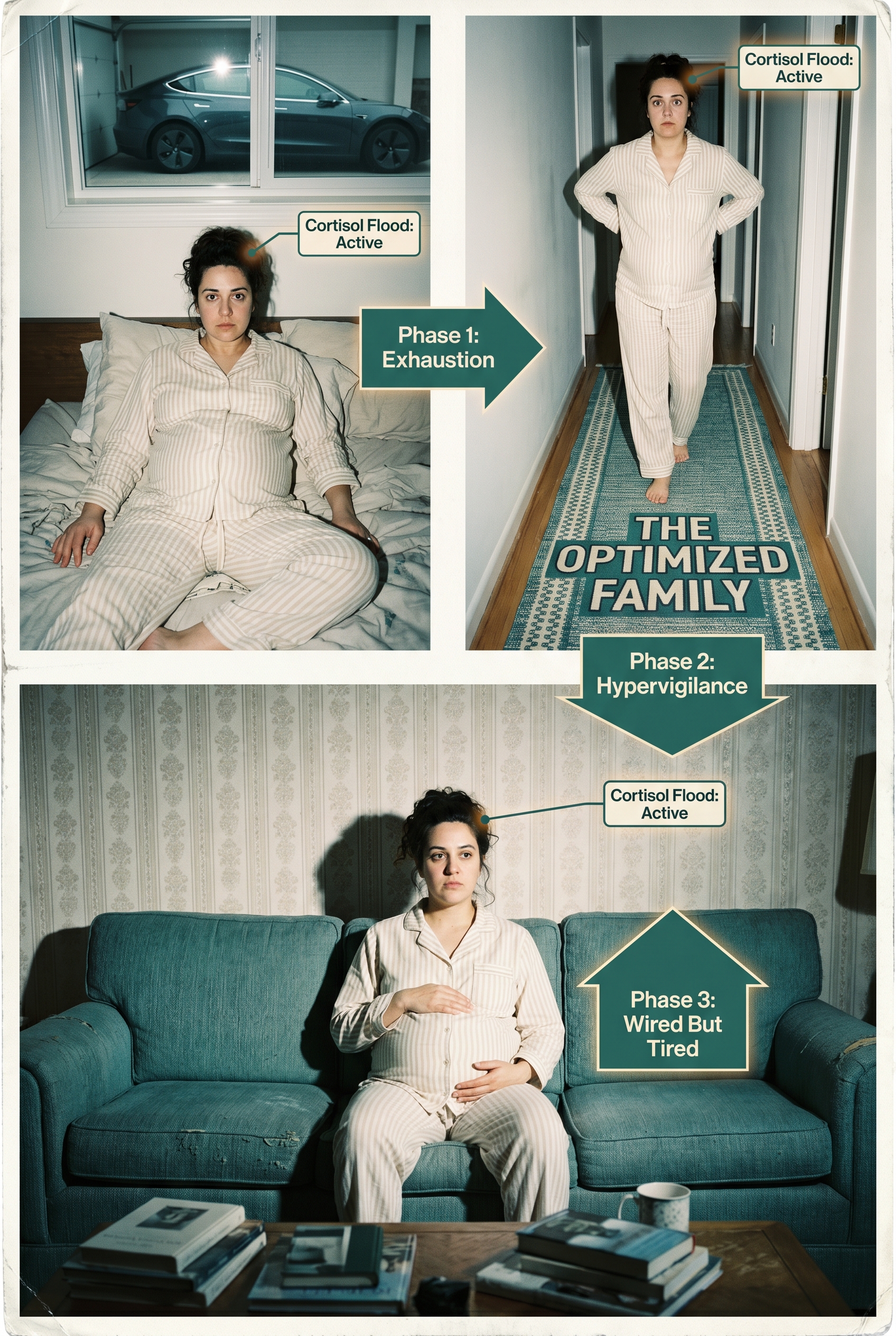
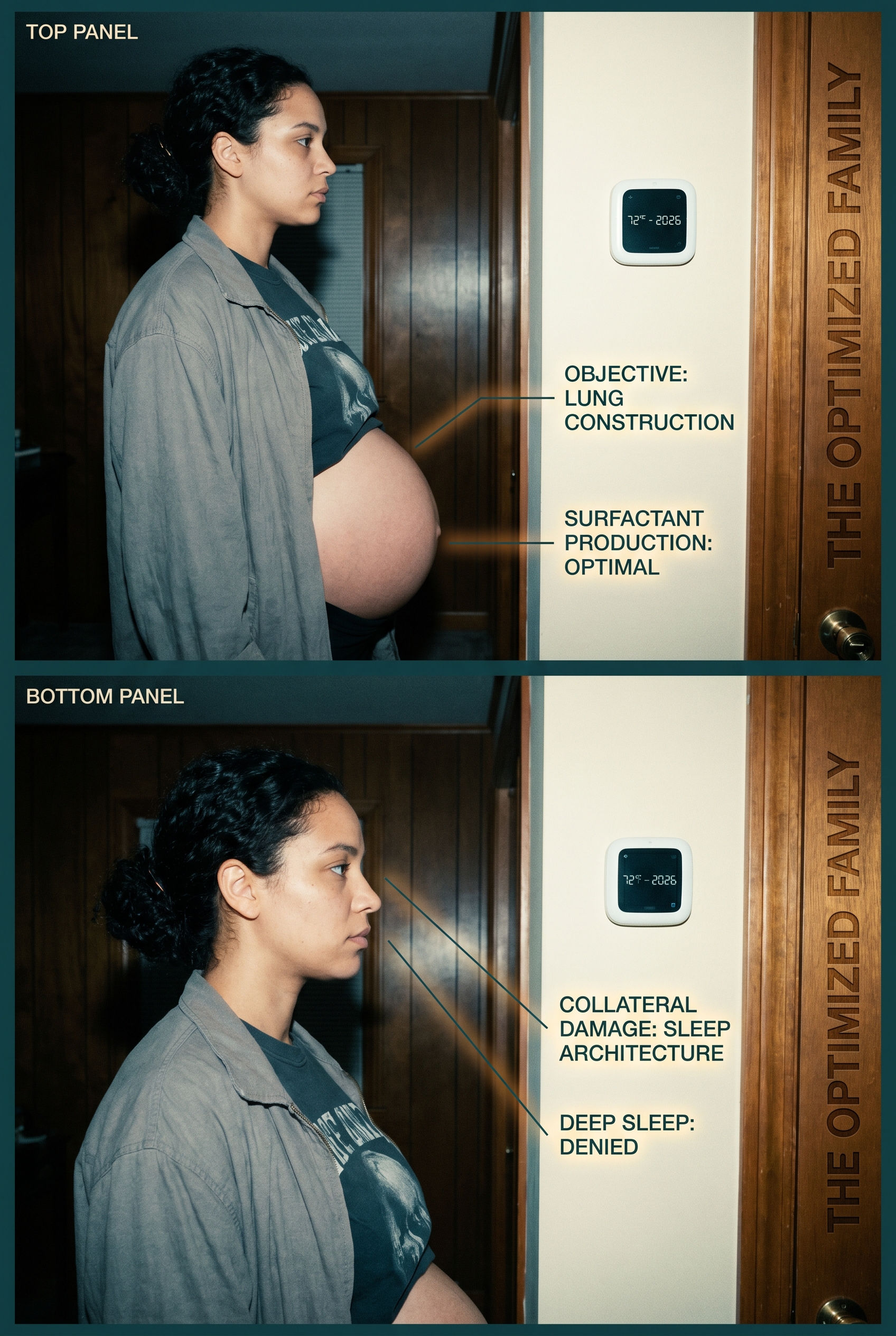
The biological toll of late pregnancy involves a massive, unavoidable spike in stress hormones. Cortisol levels rise steadily and reach concentrations two to three times higher than your normal baseline Source by the third trimester. This surge drastically alters your sleep architecture, keeping you trapped in lighter, easily disrupted sleep stages.
Cortisol is widely known as the stress hormone, which gives it a terrible reputation. But in the context of pregnancy, it is a structural engineer. Your body needs this massive hormonal wave to mature the baby’s lungs by triggering surfactant production. It is also the chemical catalyst that prepares your own tissues for the extreme physical demands of labor.
Unfortunately, your brain cannot tell the difference between “preparing for childbirth” and “running from a predator.” The hormone is the same. Therefore, your nervous system remains in a constant state of hypervigilance.
What Nobody Tells You
What nobody tells you is that this hormonal necessity completely destroys your emotional stability and sleep quality. The third trimester strips away the second-trimester honeymoon phase, replacing it with intense hypervigilance. You are biologically programmed to be on high alert, making deep, restorative rest feel physically impossible despite your exhaustion.
It is easy to blame yourself for this anxiety. You might think you are just nervous about becoming a parent. But the reality is entirely chemical.
| What You Experience | The Biological Reality |
|---|---|
| Wide awake at 3 AM | Cortisol has fundamentally altered your sleep architecture. |
| Sudden, frantic urge to organize the pantry | Hypervigilance manifesting as nesting behavior. |
| Heart racing over minor details | Operating on three times the normal stress hormone levels. |
Actionable Mitigation
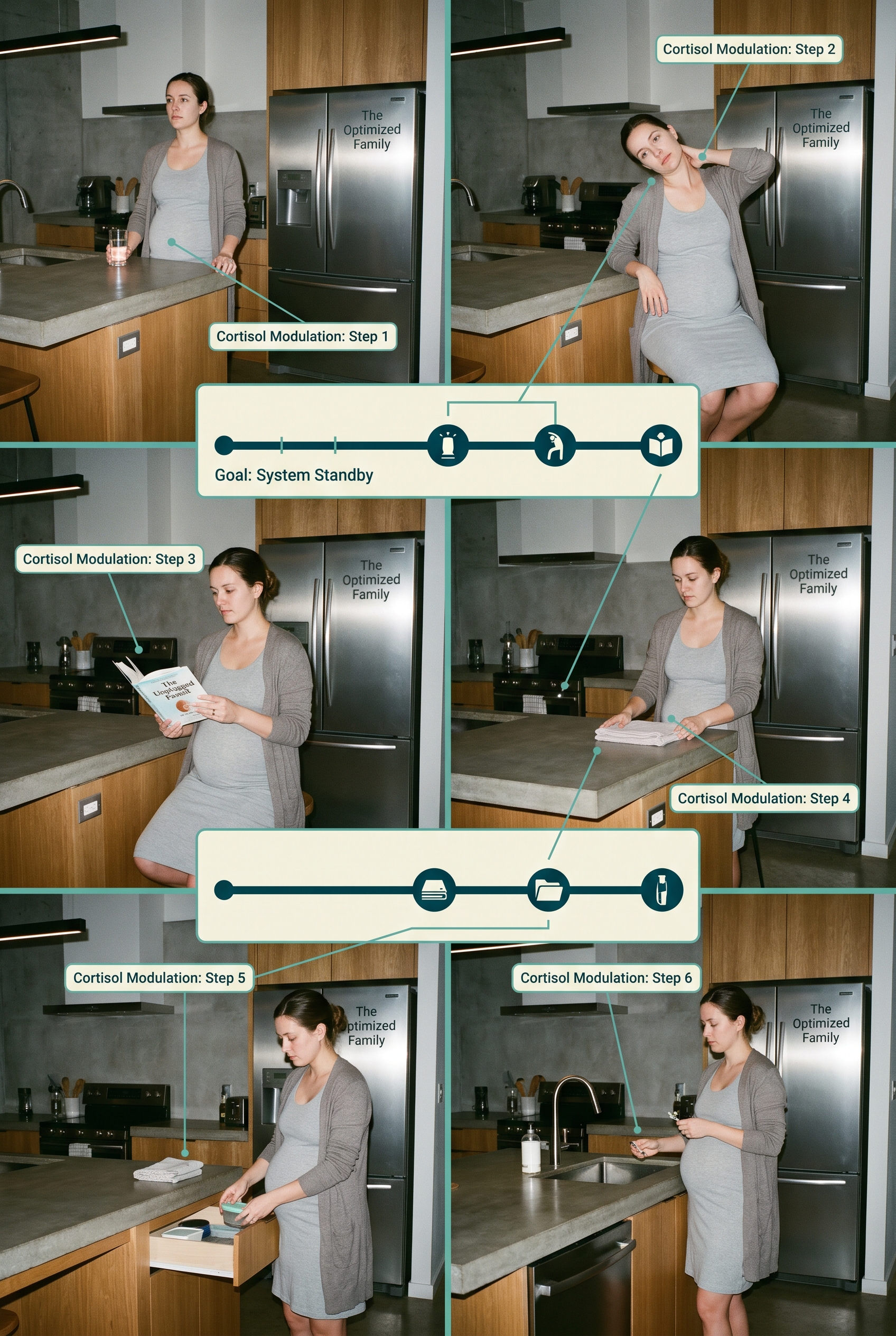
Actionable mitigation focuses on managing your physical response to the hormone, rather than trying to eliminate the hormone itself. Since this cortisol surge is biologically locked in, your goal is to soothe your nervous system through behavioral changes, strict boundaries on screen time, and targeted physical relaxation techniques.
You cannot stop the cortisol, but you can stop throwing gasoline on the fire.
Avoid these common traps:
- Midnight doomscrolling on parenting forums.
- Watching intense or stressful television before bed.
- Fighting the insomnia by lying in the dark and counting the hours until morning.
Instead, utilize these specific strategies to work with your nervous system:
- Implement a digital sunset: Turn off all screens at least an hour before bed. The blue light combined with infinite internet information is a recipe for a cortisol spike.
- Use somatic grounding: When you feel the panic rising, focus on physical sensations. Feel the weight of the blanket, the temperature of the room, and practice deep, slow breathing to signal safety to your brain.
- Accept the wakefulness: If you are awake at 3 AM, leave the bed. Read a physical book under a dim light until your eyelids get heavy. Fighting the wakefulness only generates more stress.
- Set an Information Curfew: Stop all internet research and doomscrolling at least two hours before bed to prevent cognitive hypervigilance.
- Practice Somatic Breathing: Use the 4-7-8 breathing technique for five minutes to lower immediate physical tension and signal safety to your nervous system.
- Change Your Environment: If you cannot sleep after twenty minutes, leave the bedroom and read a physical book in dim light until you feel sleepy.
- Cool the Room: Lower your bedroom temperature to 65 degrees Fahrenheit to help your body transition into the lighter sleep stages available to you.
When You Need A Doctor
You need a doctor when normal hormonal hypervigilance crosses into severe, unmanageable distress or physical warning signs. If your racing heart is accompanied by shortness of breath, severe headaches, or visual disturbances, these symptoms warrant an immediate call to your provider to rule out dangerous blood pressure complications.
There is a distinct line between feeling wired and experiencing a medical emergency. While anxiety and poor sleep are expected, any sharp pains, sudden swelling in your face or hands, or a feeling of impending doom should never be ignored. Always default to contacting your healthcare team if your physical symptoms escalate beyond simple restlessness.
Frequently Asked Questions
Frequently asked questions about third-trimester sleep and cortisol usually center around whether this exhaustion will harm the baby and if it ever ends. Below, we address the most common midnight panics with science-backed reassurance, helping you understand what is expected and how to safely navigate the final weeks.
We do the research. You do the parenting.
Stop guessing at 2 AM. Get the visual playbook.
80+ peer-reviewed studies translated into visual shortcuts you can actually use, one-handed, with a baby attached to you.
Frequently Asked Questions
Is my stress hurting the baby?
The elevated cortisol you are experiencing right now is actually helping your baby prepare for life outside the womb. It triggers surfactant production, which matures their lungs. Your subjective feeling of anxiety is a side effect of this completely normal, necessary biological process.
Why do I wake up at exactly 3 AM every night?
Your sleep architecture has fundamentally changed. High cortisol reduces your time in deep, restorative sleep and keeps you in lighter sleep stages. When you naturally cycle through sleep phases around 3 AM, the elevated stress hormones make it incredibly difficult to fall back asleep.
Can I take anything to lower my cortisol?
You cannot and should not try to lower your baseline third-trimester cortisol, as it is required for labor preparation. Instead, focus on techniques to ease the physical tension. Practice deep breathing, take warm baths, and use supportive pillows to resolve physical discomfort.
Will I ever sleep normally again after birth?
While newborn care introduces a different type of sleep deprivation, the specific wired-but-tired hormonal insomnia of the third trimester resolves after delivery. Once the placenta is delivered, your hormone profile shifts dramatically, allowing your sleep architecture to eventually return to normal.
How do I stop midnight anxiety spirals?
The most effective technique is a strict information curfew. Stop researching birth complications or reading parenting forums after dark. When you wake up anxious, get out of bed, read a physical book in dim light, and wait for the hypervigilance to pass before trying again.