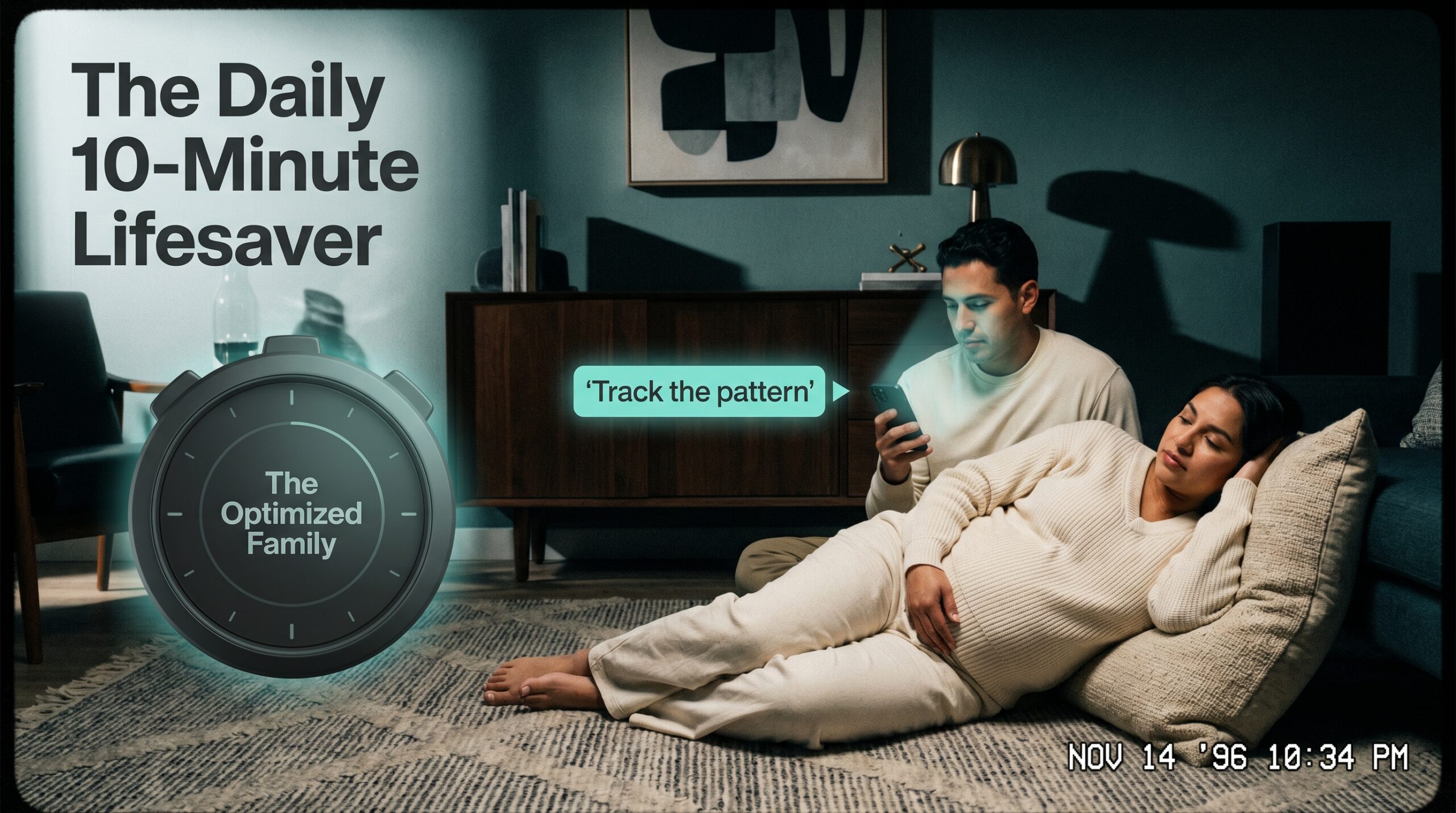
Key Highlights
- Start daily fetal movement tracking at exactly 28 weeks of pregnancy.
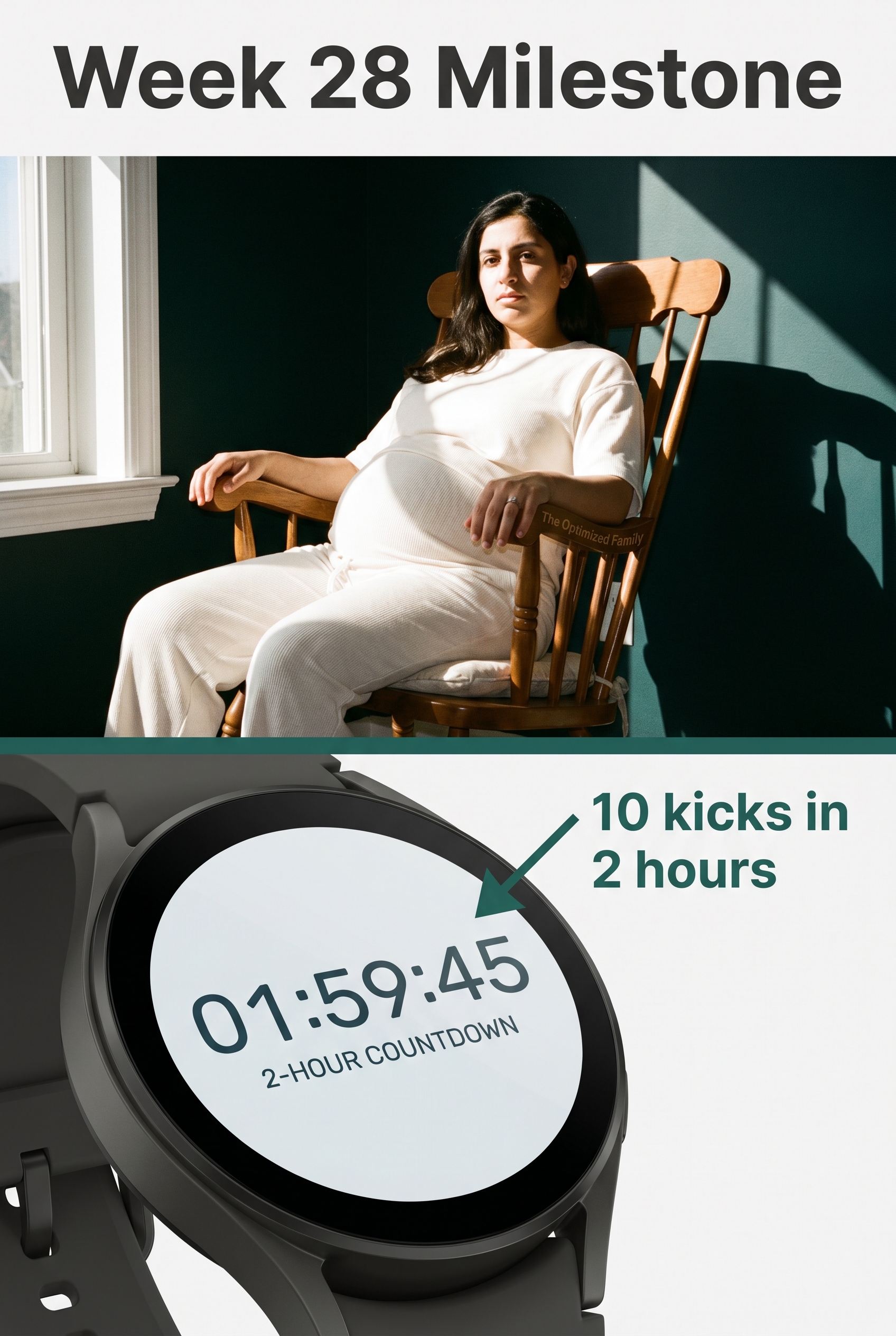
- Aim to feel at least ten distinct movements within a two-hour window.
- Most healthy babies will hit ten movements in under thirty minutes.
- Learn your specific baby’s unique activity pattern and daily schedule.
- A sudden decrease in fetal movement warrants an immediate provider call.
- Never use a home doppler to reassure yourself if movement slows down.
The Unspoken Reality
The unspoken reality of the third trimester is that your baby’s movement is the most reliable indicator of their well-being. Starting at 28 weeks, daily kick counting becomes a mandatory routine. It is a simple, zero-cost practice that requires you to log ten distinct movements within a two-hour window.
We do the research. You do the parenting. And the research on this is absolute: tracking your baby’s daily activity is non-negotiable. By the time you hit the third trimester, you are essentially operating as a walking, sleep-deprived life-support system. While you cannot see inside the womb, you can feel what is happening. According to guidelines from the American Academy of Pediatrics, consistent fetal monitoring by the mother is a frontline defense in identifying potential distress.
The Biological Toll
The biological toll of late pregnancy means your internal real estate is rapidly shrinking, fundamentally changing how movements feel. While early flutters felt like butterflies, third-trimester movements become distinct jabs, rolls, and stretches. Your job is to understand this unique biomechanical rhythm as your baby runs out of swimming room.
As the weeks progress, the sheer physics of your baby’s development translates to physical comedy at your expense. A heel to the ribs at 2 AM is just biology in action. You are looking for four primary types of movement to count toward your daily total:
- Kicks: The classic, sharp impact against your ribs or bladder.
- Rolls: The slow, alien-like shifting of your entire abdominal wall.
- Swishes: Lighter, sweeping motions as limbs drag across the uterine lining.
- Jabs: Quick, punch-like bursts that usually target your most sensitive internal organs.

What Nobody Tells You
What nobody tells you is that every single baby has a completely different baseline for normal activity. Some are nocturnal gymnasts, while others are sluggish morning loungers. The goal is not comparing your baby to a textbook, but identifying any sudden deviation from your own baby’s established daily movement schedule.
Most healthy babies are astonishingly fast at this test. Research published in the National Institutes of Health database indicates that the vast majority of fetuses complete ten movements in under thirty minutes. The two-hour window is a generous buffer to account for normal fetal sleep cycles, which typically last 20 to 40 minutes.
| Scenario | What It Means | Action Required |
|---|---|---|
| 10 movements in 20 minutes | Normal baseline activity. | None. Log it and relax. |
| Baby is quiet during a morning meeting | Normal sleep cycle. | Wait for their usual active period to count. |
| Less than 10 movements in 2 hours | Potential distress or pattern change. | Call your provider immediately. |
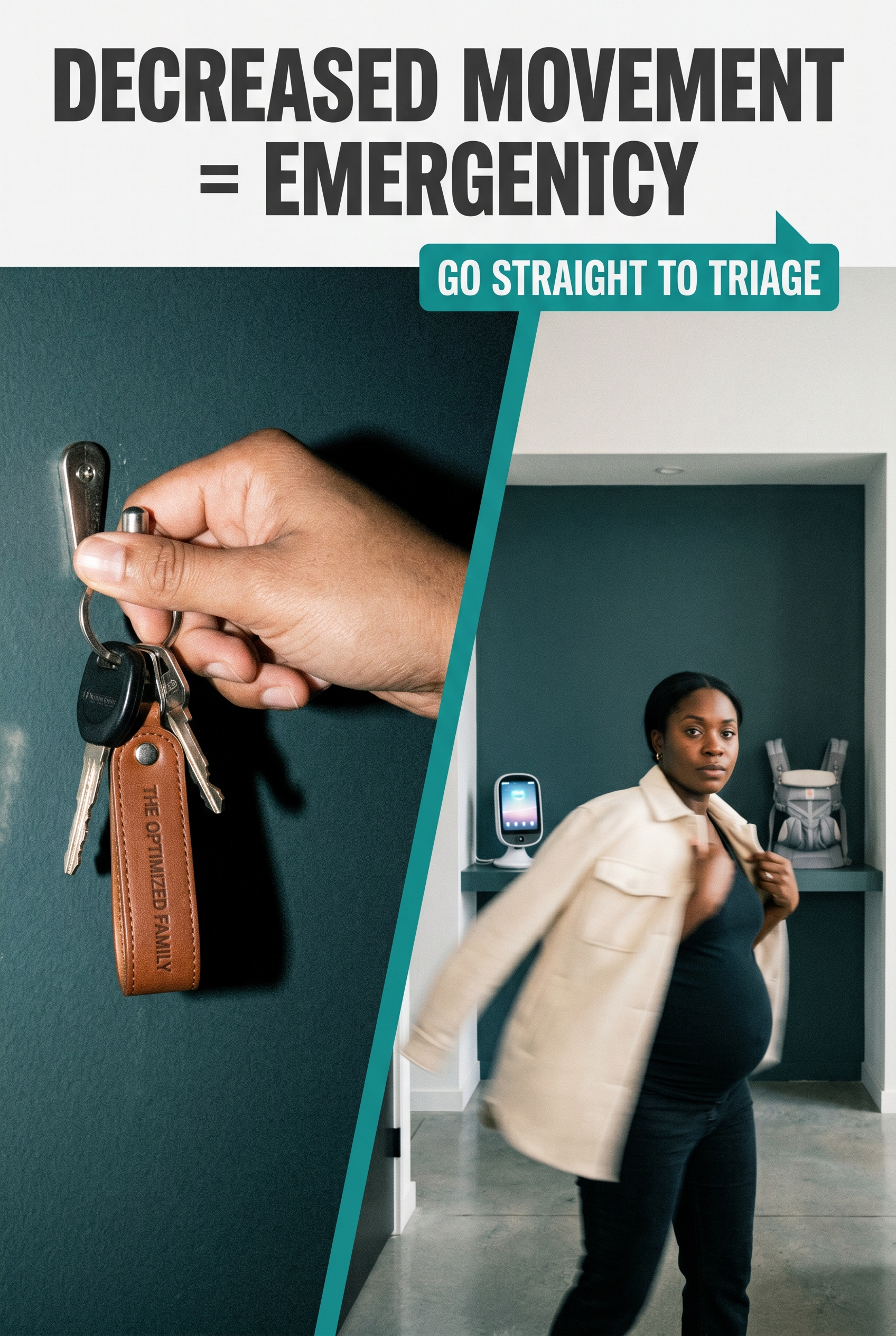
| Zero movement after cold water and a snack | Critical red flag for fetal distress. | Go to triage immediately. |
Actionable Mitigation
Actionable mitigation relies on setting up a consistent, distraction-free environment to accurately track these movements. By choosing the same time each day, drinking cold water, and lying on your left side, you maximize blood flow and give your baby the best possible conditions to demonstrate their normal baseline activity.
Do not try to count kicks while grocery shopping or chasing a toddler. You need isolation and focus. To ensure you are gathering accurate data, keep these specific parameters in mind:
- Rhythmic hiccups do not count toward your daily total.
- Focus strictly on distinct, voluntary movements.
- If you lose count, start over rather than guessing.
- Do not wait until the next day if you notice a severe drop in activity.
- Choose the right time: Pick a time of day when your baby is usually most active, often after a meal or in the late evening.
- Get into position: Drink cold water or eat a small snack, then lie on your left side or sit comfortably with your feet supported.
- Count the movements: Tally every distinct kick, roll, swish, or jab until you reach ten movements, noting how long it takes to hit that number.
- Evaluate the timeline: If you do not feel ten movements within two hours, contact your healthcare provider immediately for further evaluation.
When You Need A Doctor
You need a doctor immediately if you fail to feel ten movements within two hours, or if you notice a sudden reduction in normal activity. Decreased fetal movement is a critical warning sign that warrants immediate professional evaluation, usually through a non-stress test or ultrasound to ensure fetal well-being.
There is no room for hesitation here. According to the Centers for Disease Control and Prevention, decreased fetal movement is one of the most common warning signs preceding stillbirth. Triage nurses vastly prefer that you come in a hundred times for a false alarm rather than wait too long at home. Never use a home doppler to ease your anxiety; hearing a heartbeat does not rule out distress. If the pattern changes, make the call.
Frequently Asked Questions
Navigating fetal movement tracking brings up countless late-night questions about what is normal and what warrants a phone call. The most common inquiries involve distinguishing hiccups from kicks, understanding fetal sleep cycles, and knowing exactly when a shift in activity levels requires an immediate trip to labor and delivery triage.
We do the research. You do the parenting.
Stop guessing at 2 AM. Get the visual playbook.
80+ peer-reviewed studies translated into visual shortcuts you can actually use, one-handed, with a baby attached to you.

Frequently Asked Questions
Do fetal hiccups count toward my daily kick count total?
No, rhythmic fetal hiccups do not count toward your ten daily movements. You are specifically looking for distinct, voluntary biomechanical actions like kicks, rolls, swishes, and jabs. If your baby has hiccups, enjoy the weird sensation, but wait for actual kicks to begin your official counting session.
Should I use a home fetal doppler if movement slows down?
You should never use a home doppler to reassure yourself if your baby’s movement decreases. Hearing a heartbeat does not mean your baby is thriving; it only means their heart is currently beating. A sudden drop in activity warrants immediate professional monitoring with clinical-grade equipment.
What if my baby usually gets ten kicks in ten minutes, but today it took an hour?
A significant change in your baby’s established pattern requires attention, even if they eventually hit the ten-movement threshold. If your baby is suddenly much less active than their specific normal baseline, contact your provider immediately. Early evaluation is always the safest approach for sudden pattern shifts.
Does fetal movement normally slow down right before labor begins?
It is a dangerous myth that babies stop moving or slow down significantly right before birth because they run out of room. While the type of movement may shift from sharp kicks to rolling, the frequency should remain consistent. Any decrease warrants an immediate provider call.
What is the best physical position for accurate kick counting?
The optimal position for tracking movement is lying securely on your left side. This specific posture maximizes blood flow to your uterus, providing your baby with optimal oxygenation. If lying down is impossible, sitting comfortably with your feet fully supported is the next best option.