
Key Highlights
- Your baby gains half their total birth weight in the final twelve weeks.
- At 28 weeks, they weigh just over two pounds and measure fourteen inches.
- By 40 weeks, average babies weigh between six and nine pounds.
- This rapid expansion requires an extra 200 to 300 calories daily.
- Subcutaneous fat development helps them regulate temperature and blood sugar after birth.
- Maternal nutrition directly impacts the final push for bone density and iron storage.
We do the research. You do the parenting.
What They Do not Tell You
The secret nobody mentions about the third trimester is that your baby is about to double in size. At 28 weeks, they weigh roughly 2.25 pounds. By week 40, they will weigh between six and nine pounds. They gain half their total birth weight in just twelve weeks.
You spend the first two trimesters conceptually understanding that a baby is growing inside you. But the third trimester is when the math becomes violently physical. At 28 weeks, your baby is about 14.5 inches long and weighs approximately 2.25 pounds, according to the American College of Obstetricians and Gynecologists.
Then, someone hits the fast-forward button.
Over the next 12 weeks, your baby will pack on the remaining 50 percent of their total birth weight. They are no longer just developing organs; they are scaling up. They are expanding to fill every available cubic inch of your abdominal cavity, displacing your lungs, crushing your bladder, and rearranging your internal architecture to accommodate a final weight of 6 to 9 pounds Source.
The Physical Reality
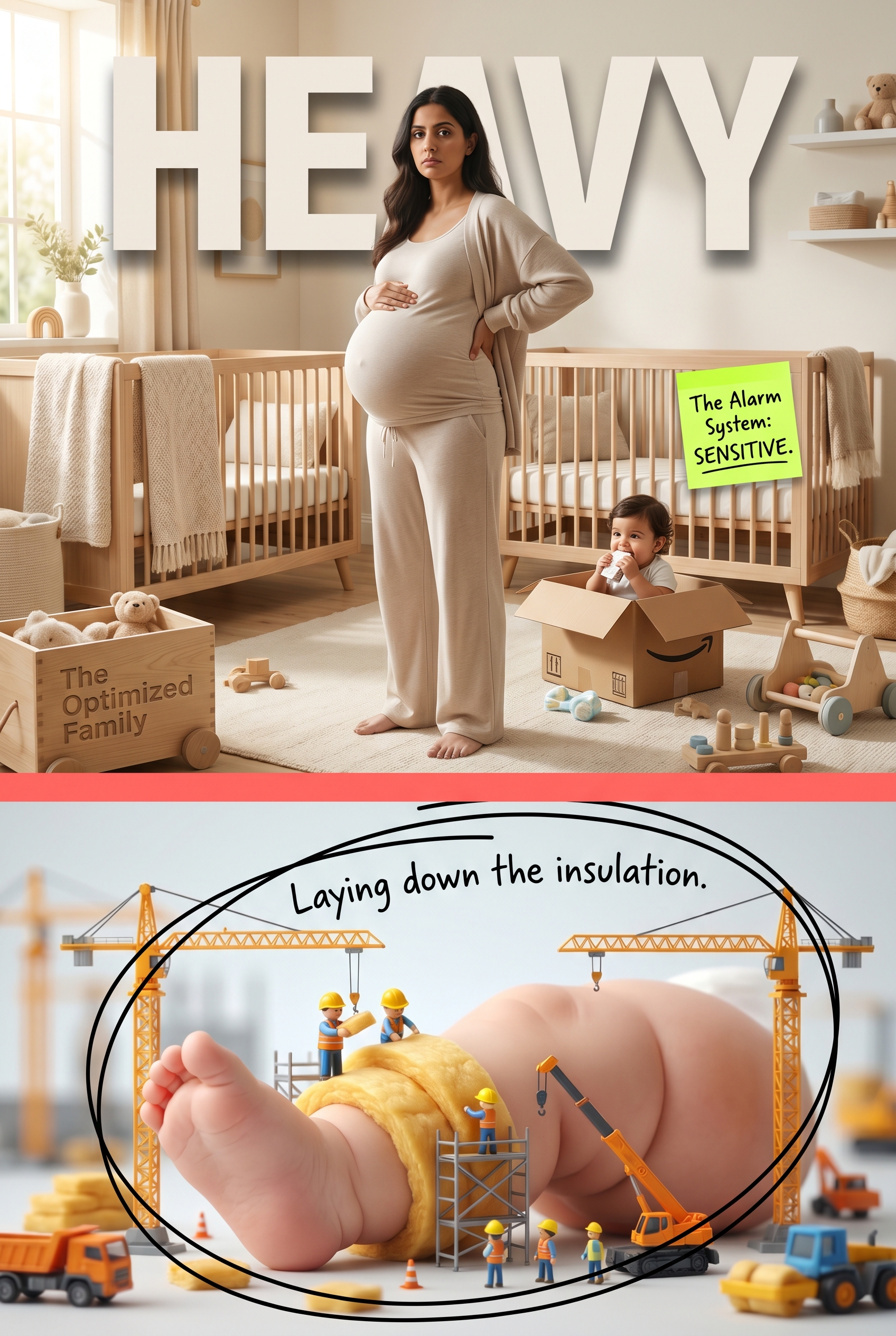
This explosive growth requires enormous nutritional and physical resources from your body. Your baby is furiously laying down subcutaneous fat, building bone density, and hoarding iron and calcium. In the final month alone, they will pack on approximately half a pound every single week.
To understand what is happening in the dark, you have to look at the biology of survival. The baby needs subcutaneous fat—that classic, chubby newborn look—to survive outside the womb. This fat is not cosmetic; it is functional. It serves as insulation and energy storage.
Here is a breakdown of the biological construction project happening inside you:
| Developmental Metric | Week 28 (Start of 3rd Trimester) | Week 40 (Full Term) |
|---|---|---|
| Average Weight | ~2.25 pounds | 6 to 9 pounds |
| Average Length | ~14.5 inches | 19 to 21 inches |
| Primary Activity | Organ maturation | Fat storage and bone density |
| Weekly Weight Gain | Steady, incremental | ~0.5 pounds per week Source |
During this phase, the baby is also ruthlessly extracting minerals from your bloodstream. According to the Harvard Center on the Developing Child, this final push is critical for building skeletal strength and storing the iron reserves they will rely on for their first six months of life.
The Cost That Nobody Warned You About
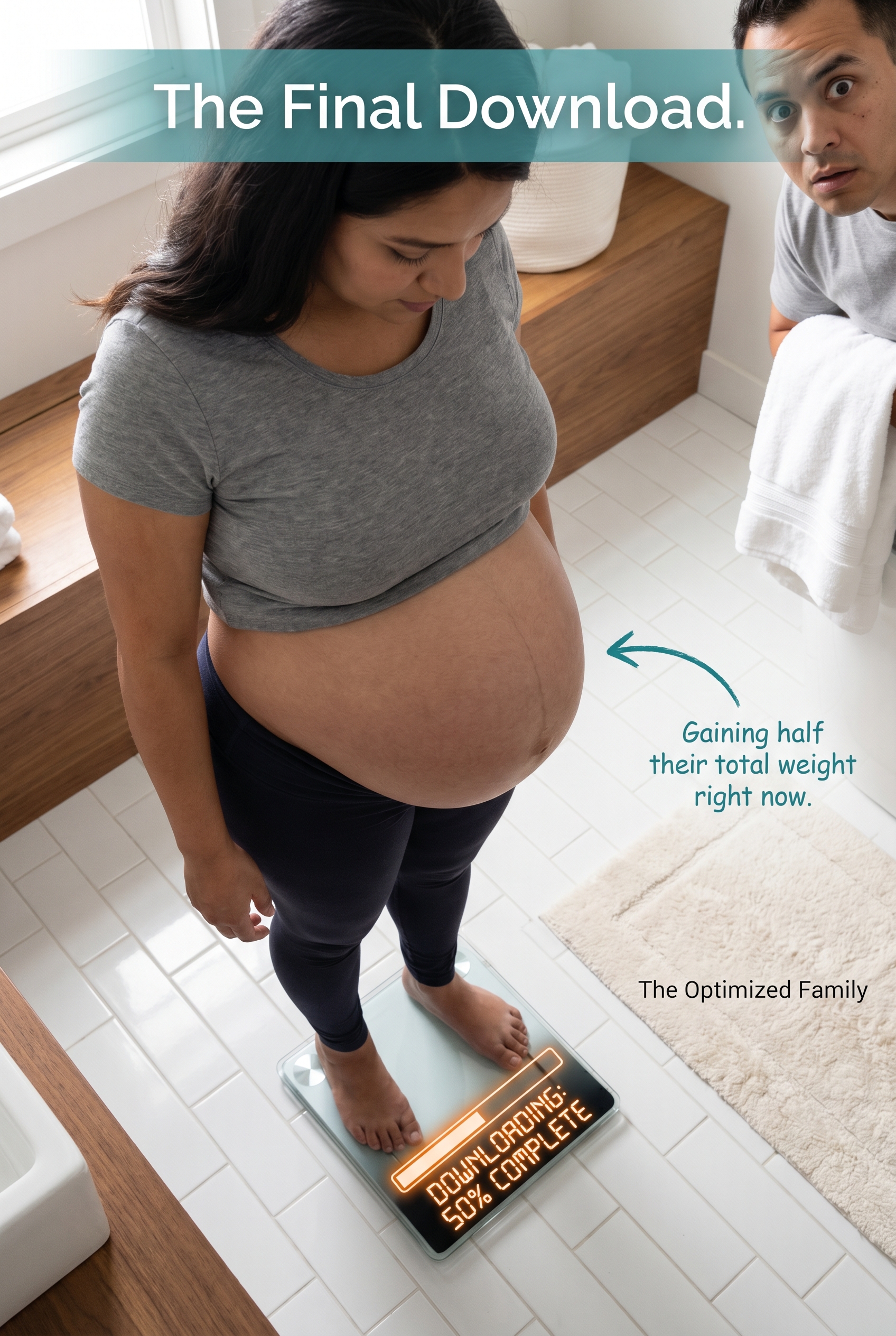
Funding this biological expansion project takes a massive toll on your energy and appetite. You are acting as a round-the-clock nutrient pipeline so your baby can regulate their temperature and blood sugar after birth. This is why you feel completely depleted and relentlessly hungry.
Your body is running a marathon while you are sitting on the couch. The sheer physics of generating human tissue at this speed requires fuel. Specifically, it requires an additional 200 to 300 calories per day Source.
The physical toll usually presents in a few specific ways:
- The Hunger: A sudden, primal need for calories that hits at 3 PM and 3 AM.
- The Exhaustion: A bone-deep fatigue caused by your body redirecting massive amounts of blood flow and energy to the placenta.
- The Heat: Your metabolism is burning hot to support the rapid cell division happening inches below your ribs.

Small Things That Actually Move The Needle
You cannot stop the expansion, but you can fuel it strategically to ease the physical strain. Focusing on nutrient-dense foods, prioritizing iron and calcium, and breaking meals into smaller, frequent snacks will help you manage the spatial constraints of your shrinking stomach.
Because your stomach is currently being compressed to the size of a tennis ball by a 5-pound roommate, eating large meals is a recipe for severe acid reflux. You have to adapt your strategy:
- Eat for density, not volume: Prioritize foods that pack high caloric and mineral value into small footprints. Nuts, avocados, and lean proteins are your best friends.
- Defend your iron: Your baby is hoarding iron for their post-birth survival. If you do not consume enough, they will simply mine it from your reserves, leaving you anemic and exhausted.
- Hydrate aggressively: Blood volume peaks in the third trimester. Water is the transport mechanism delivering those 300 extra calories to the placenta.
When This Is Medical, Not Just Hard
While extreme discomfort and fatigue are standard features of this growth phase, sudden physiological changes can indicate a serious issue. Severe swelling, sudden weight spikes, or decreased fetal movement warrant an immediate call to your provider. Do not ignore these specific warning signs.
It is incredibly difficult to distinguish between “normal third-trimester misery” and an actual obstetric crisis. However, there are clear lines in the sand. If you experience a sudden, rapid spike in your own weight (such as gaining several pounds in just a few days), or if you notice severe swelling in your hands and face, these symptoms warrant an immediate call to your provider. Furthermore, while the baby is running out of room, their movement patterns should remain consistent. A noticeable decrease in kicks or rolls is a non-negotiable reason to seek professional evaluation.
The Questions You would Google at 2 AM
Late-night anxiety is a universal feature of the third trimester. You are awake because a tiny foot is wedged into your ribs, and your brain is spinning with questions about weight gain, nutrition, and whether this level of exhaustion is standard operating procedure.
(See the FAQ section below for the answers to your 2 AM panic searches.)
- Switch to Micro-Meals: Because the baby is compressing your stomach, abandon the three-meal-a-day structure. Eat five to six small, nutrient-dense snacks to prevent acid reflux while still hitting your caloric needs.
- Prioritize Iron and Calcium: The baby is actively stockpiling these minerals for life outside the womb. Incorporate dark leafy greens, dairy, or fortified alternatives into every single micro-meal to protect your own bodily reserves.
- Add 300 Strategic Calories: Do not just eat more volume; eat higher density. Add an extra 200 to 300 calories of healthy fats and proteins daily to fuel the baby’s half-pound-per-week growth sprint.
- Hydrate for Blood Volume: Your blood volume is at its absolute peak to support the placenta. Drink water consistently throughout the day to facilitate nutrient transport and help reduce normal third-trimester swelling.
We do the research. You do the parenting.
Stop guessing at 2 AM. Get the visual playbook.
80+ peer-reviewed studies translated into visual shortcuts you can actually use, one-handed, with a baby attached to you.

Frequently Asked Questions
Is it normal to gain half a pound a week in the third trimester?
Yes. In the final month of pregnancy, the baby accelerates their growth dramatically, gaining about half a pound per week. This rapid expansion is entirely necessary to build the subcutaneous fat stores they need to survive and regulate their temperature outside the womb.
Why am I suddenly so hungry at 32 weeks?
Your baby is currently undertaking a massive biological construction project, gaining half their birth weight in just twelve weeks. This process requires an extra 200 to 300 calories daily. Your sudden, intense hunger is simply your body demanding the fuel required to finish the job.
Does what I eat now actually change the baby’s fat stores?
Absolutely. Maternal nutrition in the third trimester directly impacts your baby’s final birth weight and subcutaneous fat stores. These fat stores are critical because they dictate your newborn’s ability to regulate their own blood sugar and maintain their body temperature after birth.
Why do I feel so hot and sweaty all the time?
You are carrying a rapidly growing human heater. Your blood volume has increased by roughly fifty percent, and your metabolism is working overtime to support the baby’s explosive growth. This massive energy expenditure naturally raises your core body temperature, leaving you sweating.
When should I worry about sudden weight gain?
While steady weight gain is expected as your baby grows, sudden, rapid spikes—like gaining several pounds in a few days—are a major red flag. This, especially when paired with severe swelling or headaches, warrants an immediate call to your healthcare provider.