
Key Highlights
- Pregnancy physically restructures your brain’s gray matter for maximum efficiency.
- Neural pruning targets areas responsible for empathy and social processing.
- Brain volume reduction correlates with stronger maternal attachment to infants.
- Your brain becomes hyper-focused on detecting threats to your baby.
- Functional MRI scans show intense neural activity when viewing your infant.
- This biological upgrade replaces random thoughts with targeted infant focus.
We do the research. You do the parenting.
What They Do not Tell You
The internet jokes about “baby brain” as if pregnancy simply makes you clumsy and forgetful. The uncomfortable truth is that your brain is executing a ruthless, highly targeted demolition project. It is actively stripping away gray matter to rebuild you into a highly specialized, threat-detecting parent.
You are not losing your mind; you are losing the parts of your mind that do not serve immediate survival. Society frames this as a deficit, a foggy period where you cannot remember where you left your phone. In reality, your brain is shedding extraneous connections to ensure that when your baby arrives, you are biologically locked onto their every need.
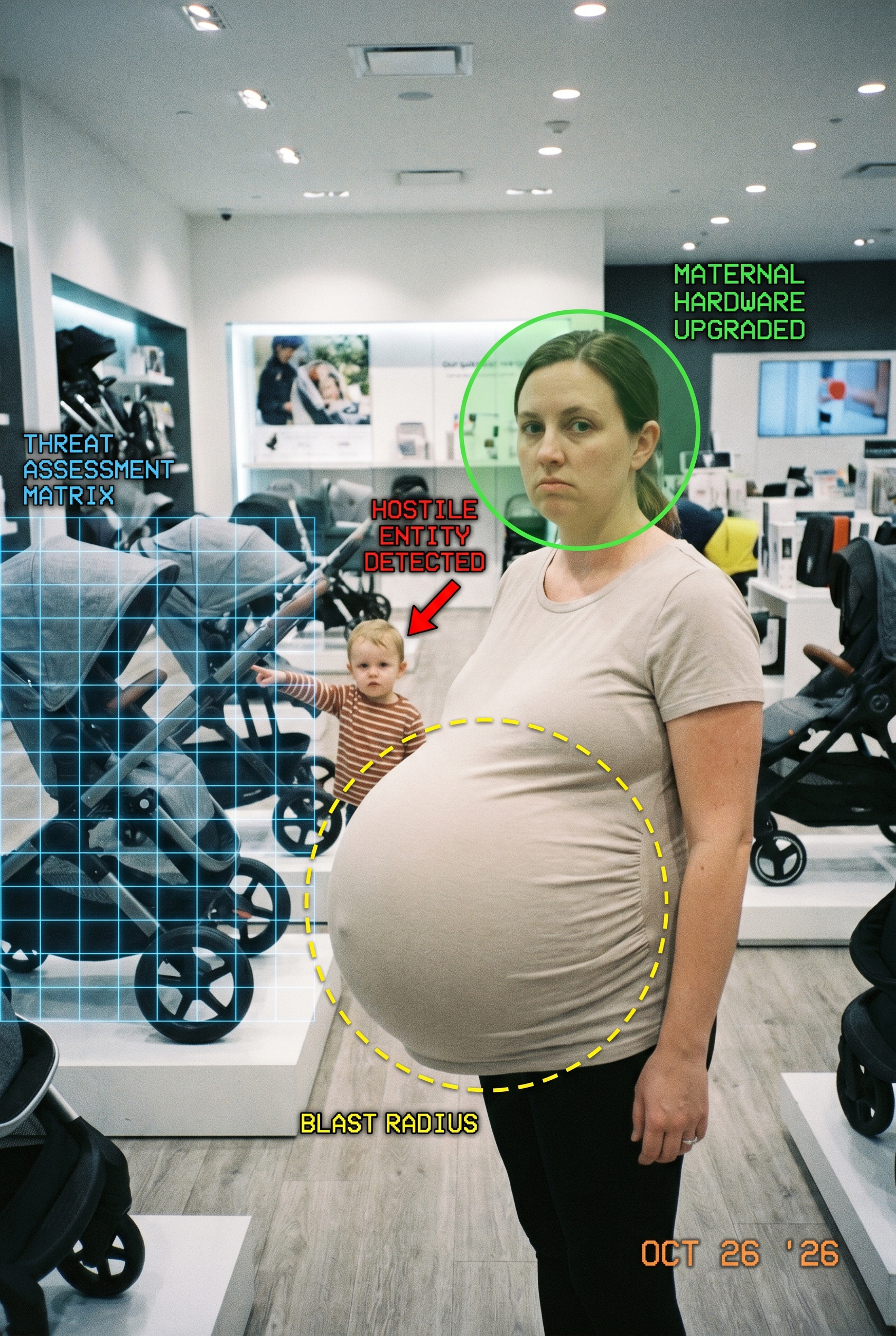
The Physical Reality
During the third trimester, your brain undergoes significant structural pruning, specifically in the regions that control “theory of mind” and social processing. This physical reduction of gray matter makes your neural pathways infinitely more efficient at decoding a newborn’s needs and sensing immediate danger.
This is not a metaphor. According to research published in Nature Neuroscience, pregnancy causes a measurable, symmetrical reduction in gray matter volume. After this pruning, these regions do not become weaker; they become hyper-efficient. Functional MRI studies demonstrate that when mothers look at photos of their own baby, these exact pruned regions light up with intense, focused activity. Your brain is clearing the brush so the signal can travel faster. It is a biological upgrade designed for a species whose infants are born entirely helpless.
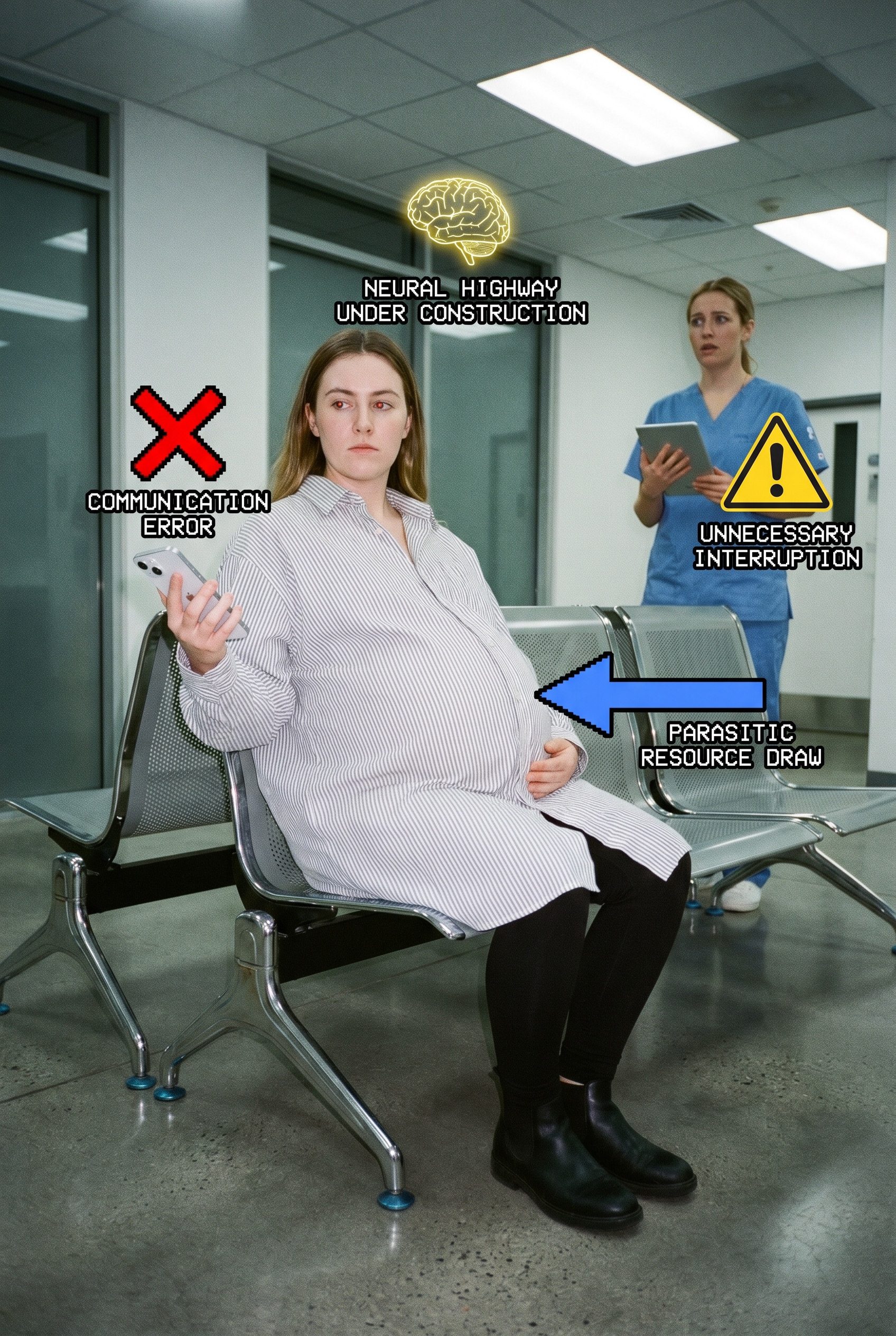
The Cost That Nobody Warned You About
The biological cost of this neural upgrade is your short-term working memory and your patience for trivial matters. Because your brain is hyper-attuned to your baby’s survival, it systematically deprioritizes remembering passwords, returning emails, or caring about your partner’s minor workplace drama.
Remarkably, the extent of this gray matter reduction directly correlates with the strength of a mother’s attachment. Women who show the most structural change score the highest on measures of hostility toward potential threats to their infant.
| What You Experience | The Biological Reality |
|---|---|
| Forgetting where you parked | Gray matter pruning to optimize essential survival circuits. |
| Sudden hostility toward strangers | Heightened threat detection to protect a helpless infant. |
| Crying at a diaper commercial | Enhanced “theory of mind” and empathy restructuring. |

Small Things That Actually Move The Needle
To manage this intense biological transition, you must stop fighting the brain fog and start outsourcing your memory. Write everything down, automate your daily tasks, and lean into the fact that your cognitive resources are currently busy building a specialized infant survival system.
You cannot force your brain to care about things it has biologically deemed irrelevant. Instead, change your environment to support your new neural architecture:
- Stop expecting your brain to care about complex spreadsheets or trivial gossip.
- Accept that sudden hostility toward perceived threats is a biological feature, not a flaw.
- Forgive yourself for the dropped balls; they were dropped on purpose by your own neurology.
To practically survive this phase:
- Put absolutely everything on a shared digital calendar.
- Set phone alarms for basic human functions, like eating lunch or taking the dog out.
- Tell your partner to handle the household logistics, explicitly stating that your brain is occupied.
When This Is Medical, Not Just Hard
While forgetting your keys is a normal part of this neural pruning, severe cognitive distress, terrifying intrusive thoughts, or a complete inability to function require professional support. These symptoms warrant an immediate call to your provider, as they signal complications beyond standard biological restructuring.
It is crucial to differentiate between an optimized, threat-detecting brain and a brain overwhelmed by perinatal mood disorders. Based on CDC maternal mental health data, about 1 in 8 women experience significant postpartum depression, which frequently begins showing signs in the third trimester. If your heightened threat detection turns into paralyzing anxiety, or if you feel entirely disconnected from reality, step away from the internet and contact your care team.
The Questions You would Google at 2 AM
When you are awake in the middle of the night wondering if your memory will ever return, you are likely searching for reassurance. Below are the exact, frantic questions parents ask about this mental shift, answered with the cold, comforting reality of biology.
- Acknowledge the Biological Shift: Accept that your brain is actively pruning connections to prioritize infant survival over remembering where you left your keys.
- Offload Your Working Memory: Use physical lists, phone alarms, and calendar reminders to handle the mundane tasks your brain is currently ignoring.
- Embrace the Threat Detection: Channel your heightened awareness into productive baby-proofing rather than late-night anxiety spirals.
- Communicate Your Needs: Explain to your partner that your brain is biologically occupied, and clearly ask them to manage household logistics.
We do the research. You do the parenting.
Stop guessing at 2 AM. Get the visual playbook.
80+ peer-reviewed studies translated into visual shortcuts you can actually use, one-handed, with a baby attached to you.
Frequently Asked Questions
Is baby brain a real physical thing?
Yes. It is not just sleep deprivation. Your brain physically changes during pregnancy, shedding gray matter in specific areas to make your neural networks more efficient. This restructuring specializes your brain for empathy, social processing, and keeping a helpless infant alive.
Will I ever get my normal memory back?
Research indicates that these structural changes are long-lasting, often persisting for years after birth. However, your working memory will improve once you are no longer severely sleep-deprived. You are not permanently forgetful; you have just permanently upgraded your threat-detection hardware.
Why do I feel so angry at everyone right now?
The reduction in gray matter correlates directly with maternal attachment and hostility toward perceived threats. Your brain is currently wired to view the outside world as a potential danger to your baby. That sudden rage is an evolutionary defense mechanism kicking in.
Does my partner get baby brain too?
Partners do experience hormonal and neurological shifts when interacting with a new baby, but the intense, structural gray matter pruning seen in pregnancy is unique to the gestational parent. Their brain changes are driven by proximity and caregiving, not the biological sledgehammer of pregnancy.
How do I stop forgetting important things at work?
You cannot out-will a biological restructuring process. You must externalize your memory. Use project management tools, set phone alarms for every meeting, and write down instructions immediately. Accept that your internal hard drive is temporarily partitioned to focus entirely on infant survival.