
Key Highlights
- Pregnancy rhinitis affects 20 to 30 percent of expectant mothers during their third trimester.
- Surging estrogen causes nasal mucous membranes to swell and produce excessive amounts of mucus.
- Unlike a standard cold, this condition presents without a fever or a sore throat.
- Nighttime congestion significantly worsens sleep deprivation and frequently causes unexpected heavy snoring.
- Safe relief techniques include saline sprays, nasal strips, and elevating your head during sleep.
- Symptoms typically resolve completely within two weeks after delivery as your hormone levels drop.
What They Do not Tell You
You expect the backaches and the endless bathroom trips, but nobody warns you about the permanent, suffocating nasal congestion. Pregnancy rhinitis is a persistent swelling of your nasal passages that mimics a never-ending cold, minus the fever, leaving you gasping for air and snoring like a freight train.
We do the research. You do the parenting. And the research here is as uncomfortable as the symptom itself: your nose has essentially become a casualty of your own reproductive success. According to the National Institutes of Health, pregnancy rhinitis impacts roughly 20 to 30 percent of women, primarily striking with a vengeance in the third trimester. It is a chronic, daily reality that transforms basic breathing into a conscious, exhausting chore.
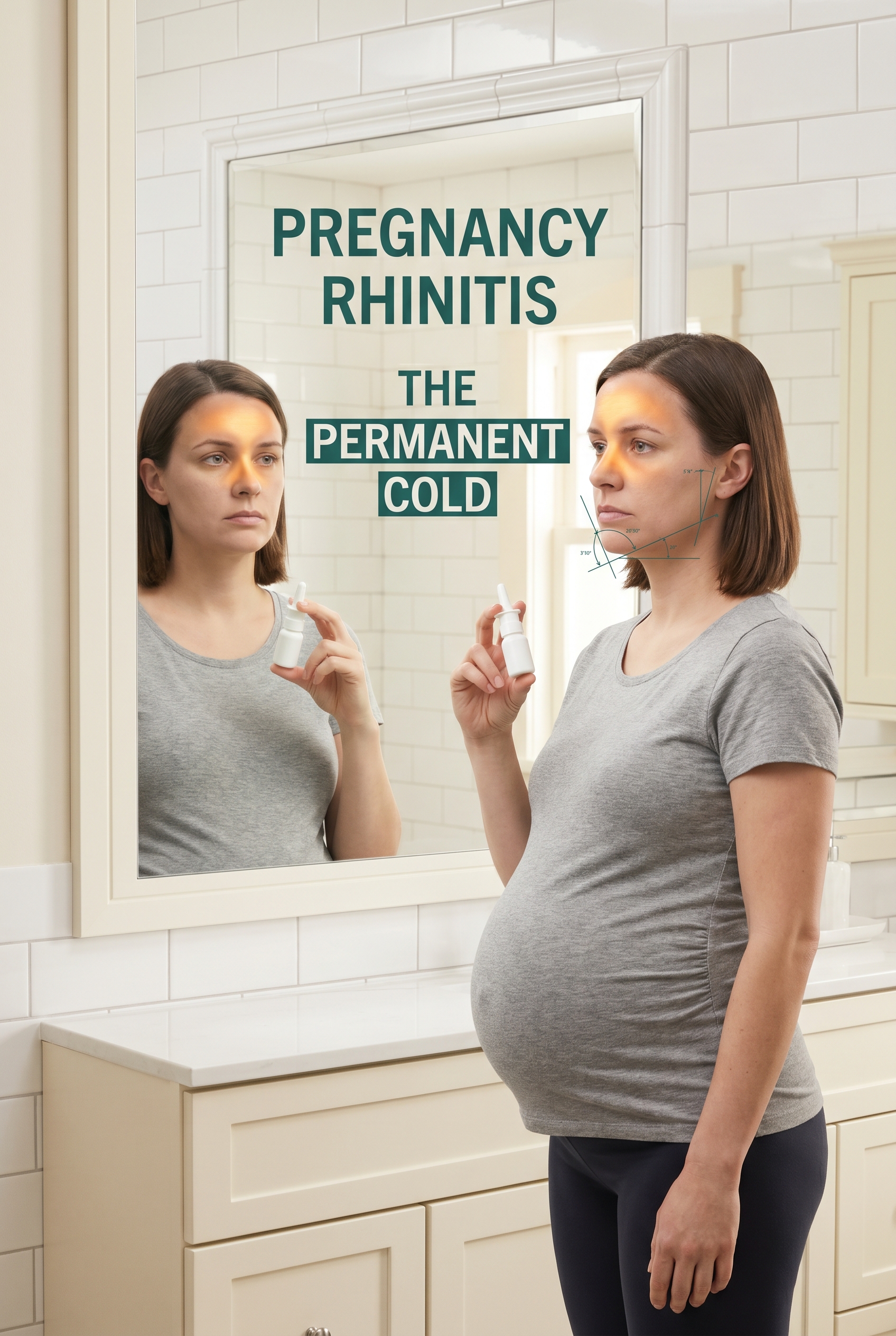
The Physical Reality
Your blocked nose is entirely driven by hormones, not a viral infection. Massive surges in estrogen increase blood volume throughout your body, causing the delicate mucous membranes inside your nose to engorge, swell shut, and produce a staggering amount of excess mucus that blocks normal airflow completely.
Because this is an anatomical change rather than an illness, the standard immune responses are entirely absent. You are not fighting off a bug; your body is simply remodeling itself for childbirth, and your nasal passages are caught in the crossfire.
| Symptom | A Standard Cold | Pregnancy Rhinitis |
|---|---|---|
| Fever or Chills | Very common | Never |
| Sore Throat | Usually the first sign | Only from mouth-breathing |
| Duration | 7 to 10 days | Months on end |
| Cause | Viral invaders | Estrogen-fueled swelling |

The Cost That Nobody Warned You About
The true toll of this congestion is the absolute destruction of whatever fragmented sleep you had left. Forced mouth-breathing leads to a painfully dry throat, cracked lips, and sudden, aggressive snoring that can drive your partner to the couch and leave you exhausted before the baby even arrives.
The physical reality of third-trimester sleep is already a logistical nightmare of body pillows and hip pain. Adding oxygen deprivation to the mix creates a cascade of secondary frustrations:
- Painfully dry mouth upon waking
- Sudden onset of lumberjack-level snoring
- A feeling of pressure behind the eyes
Small Things That Actually Move The Needle
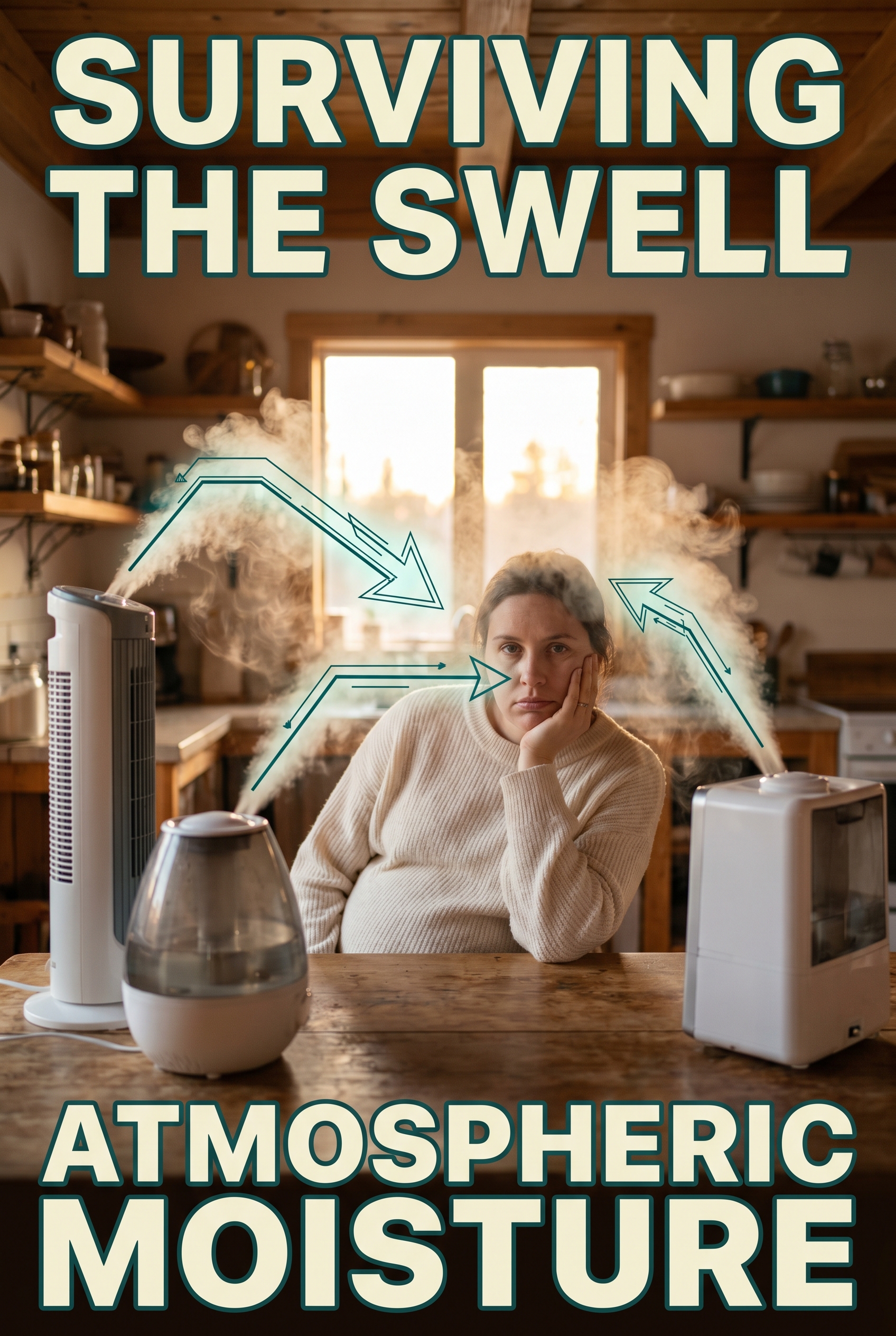
Because most standard OTC options are off-limits, finding relief requires mechanical and environmental adjustments. Elevating your head, using saline sprays, wearing nasal strips, and running a humidifier can significantly reduce the swelling and help you breathe enough to grab a few hours of desperately needed rest.
The timeline for this condition is fixed, but the end is guaranteed. Research indicates that symptoms resolve for nearly 100 percent of women within a very specific window postpartum Source. Here is the typical progression:
- Week 30: The swelling reaches its peak intensity as estrogen maximizes.
- Delivery Day: Estrogen levels begin their dramatic plummet.
- Day 14 Postpartum: The nasal passages finally return to their original, unswollen state.
When This Is Medical, Not Just Hard
While chronic stuffiness is a normal hormonal side effect, secondary bacterial infections require professional attention. If your nasal discharge becomes thick and green, you develop facial pain, or you spike a fever, these signs warrant an immediate call to your provider to rule out a severe sinus infection.
Pregnancy suppresses your immune system slightly, making you more susceptible to opportunistic bugs. Do not dismiss severe pain or fever as just another pregnancy symptom. Navigating the difference between annoying physical realities and actual infections is critical for your safety.
The Questions You would Google at 2 AM
Late-night panic searches usually revolve around whether this congestion will harm the baby, if the snoring is permanent, and when it will finally end. The short answer is that your baby is getting plenty of oxygen, your nose will recover, and the swelling vanishes shortly after you deliver.
(See our FAQ below for the specific, science-backed answers to your 2 AM panic searches.)
- Elevate your sleeping position: Stack two or three pillows to keep your head higher than your chest, allowing gravity to reduce blood pooling in your nasal passages.
- Apply a nasal strip: Place a rigid adhesive nasal strip across the bridge of your nose before bed to physically pull your nasal passages open.
- Run a cool-mist humidifier: Keep a humidifier running on your nightstand to add moisture to the air, preventing the swollen nasal tissues from drying out and cracking.
- Flush with sterile saline: Use a simple saline spray or rinse before bedtime to clear out excess mucus without introducing active pharmaceutical ingredients into your system.
We do the research. You do the parenting.
Stop guessing at 2 AM. Get the visual playbook.
80+ peer-reviewed studies translated into visual shortcuts you can actually use, one-handed, with a baby attached to you.
Frequently Asked Questions
Is my baby getting enough oxygen when I cannot breathe through my nose?
Yes, your baby is perfectly safe. While mouth-breathing feels incredibly uncomfortable and inefficient for you, your body is highly adapted to prioritize oxygen delivery to the placenta. Your baby continues to receive a steady, optimized supply of oxygen regardless of your nasal congestion.
Can I use standard over-the-counter decongestant sprays?
Most traditional decongestant sprays are not recommended for expectant mothers because they can cause rebound congestion or affect blood pressure. Always rely on sterile saline sprays or physical dilators like nasal strips, and discuss any pharmaceutical OTC options directly with your obstetrician before using them.
Will the snoring continue after my baby is born?
The intense snoring caused by pregnancy rhinitis is almost always temporary. Because it is driven entirely by elevated estrogen swelling your nasal tissues, the snoring typically resolves completely within two weeks of delivery once your hormone levels drop back to their baseline state.
Why is the congestion so much worse when I try to sleep?
Gravity works against you when you lie flat. Blood pools in your head and neck, increasing the swelling in your already engorged nasal passages. Elevating your head and shoulders with a wedge pillow uses gravity to pull fluid downward, which helps ease the pressure.
Does this mean I have a severe sinus infection?
Not necessarily. Pregnancy rhinitis perfectly mimics the pressure and stuffiness of a sinus infection but lacks the bacterial markers. However, if you develop facial pain, a fever, or thick green discharge, those symptoms warrant an immediate call to your provider to rule out infection.